
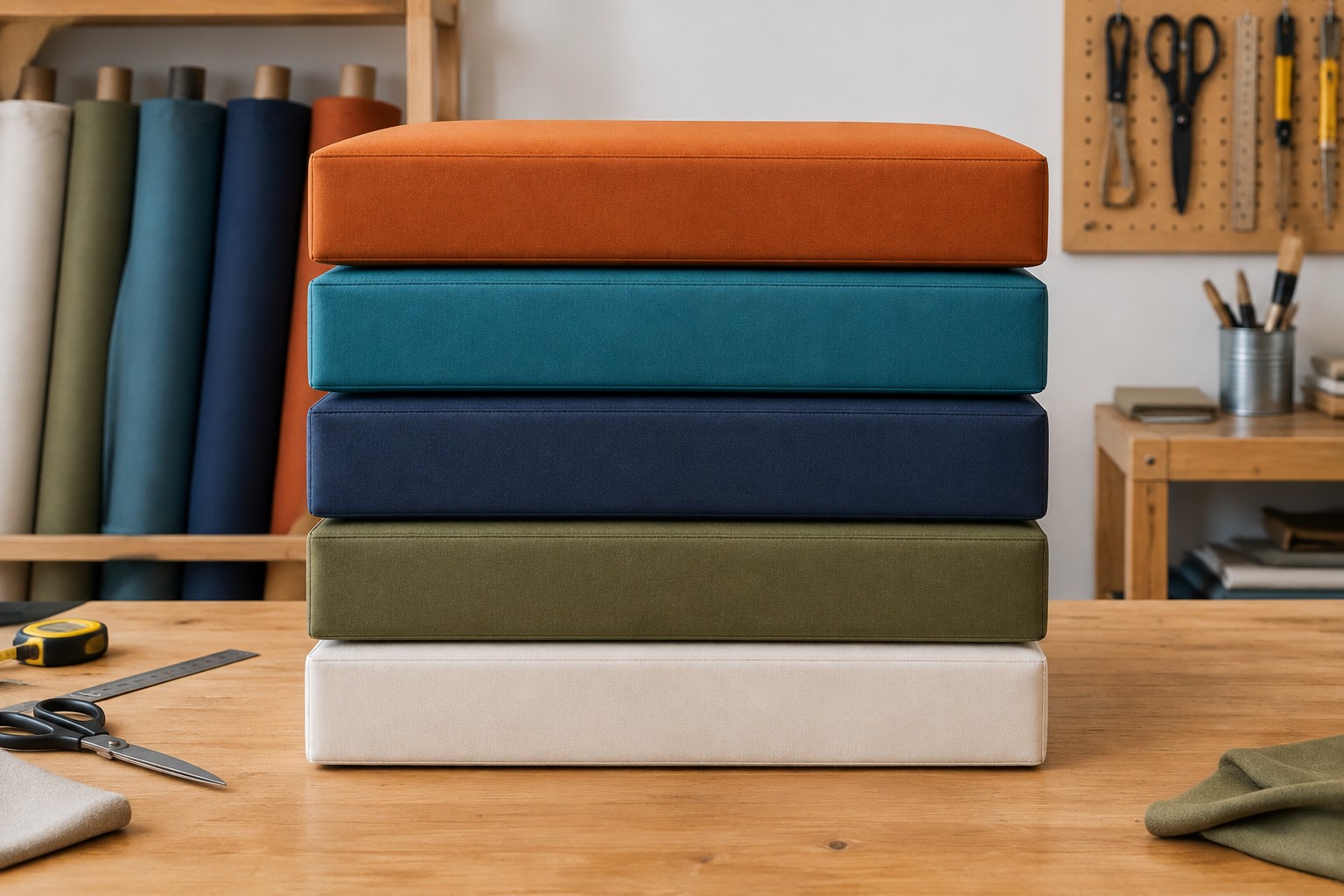
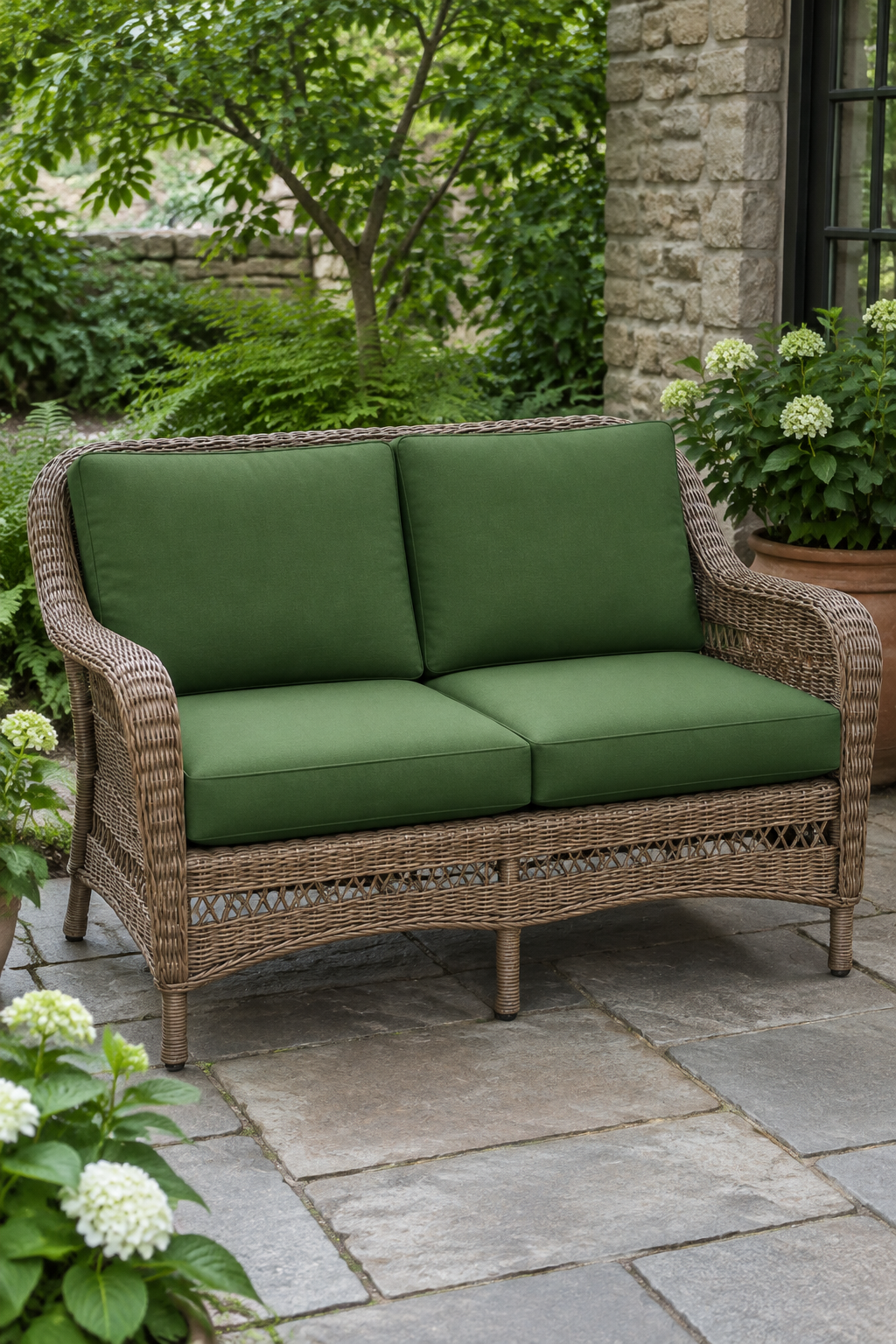
Straightforward cushions are easy to order: lay a tape across, read three numbers, done. A Willow Glen set with curved seats ends that simplicity, because the tape will not bend into an honest reading. The seat front sweeps in an arc, the back-rest follows its own curve, and the frustrated owner holding a tape measure ends up measuring something — usually a number the cushion, when cut to it, does not agree with. Curved seats are not harder to fit. They are harder to describe, and describing them is a learnable skill.
The chord: a straight line across a curved world
The single most useful number for any curved seat is the chord — the straight-line distance from one end of the curve to the other, measured where the fabric will actually sit. Lay the tape on the seat, anchor it at the left edge, pull it taut to the right edge, and read it like any ordinary width. What you have captured is not the full arc length — the tape is straight and the seat is not — and that is fine, because a chord is precise, repeatable, and tells the cutting bench exactly which geometry family it is dealing with.
The chord’s partner is the sagitta, the old carpenter’s term for how far the curve bows away from that straight line. Find the midpoint of your chord, then measure the gap from the tape (held taut, still in place) out to the front edge of the seat at its deepest point. A two-inch bow on a 48-inch chord is a gentle arc; a five-inch bow is a real crescent; and the two need entirely different cutting approaches even at identical widths. Chord and bow together reduce any simple curve to two numbers a straight ruler can capture honestly — no flexible tape gymnastics required.
One caution makes the whole system work: measure chord and bow at the seat surface, not at the frame’s decorative rim. Rims overhang, front rails flare, and neither will touch the cushion. The specification is the surface the foam rests on, nothing else.
When one curve becomes two or three
Long curved benches — the kind that wrap a firepit or trace a planting bed — rarely hold a single consistent arc. The standard technique is to stop treating them as one cushion at all: divide the run into two or three sections at natural breaks, and measure each section as its own seat with its own chord and bow. Three 18-inch sections each cut to their own gentle arc will sit flat and wear evenly, where one 54-inch crescent fought the geometry constantly and creased at the first sit.
Section breaks want planning. Put them where the frame itself offers a seam or support bar; offset them from the spots people favor sitting across, which are always dead center; and note the angle where sections meet if the bench changes direction — a wrapping bench turns, and the turn is data the bench needs. For each section, the three ordinary dimensions still apply: the width (as chord), the front-to-back depth, and the thickness at the seam, all per the measuring guides.
And when the geometry refuses to cooperate even with chord, bow, and sections — compound curves, wedge shapes where the front edge is longer than the back, seats that twist as they wrap — there is a final method that outranks all measurement: the paper template. Roll out kraft or butcher paper, press it flat to the seat, trace the outline of the sitting surface, mark the front edge, and mail or photograph it. A traced edge carries information no list of numbers can, and templates are welcome evidence at this bench.
Curved backs and the wedge problem
Back-rests on curved seating introduce the trap that catches most self-measurers: the front face of a curved back is a different length than its rear face, because the back wraps an arc and one side of the wrapping is inside the curve. Measure only the front and the cushion arrives too long at the wall; measure only the back and it bunches at the front. The honest fix is to capture both figures — front-edge length and rear-edge length — and let the difference describe the wedge. Curved-back rebuilds are routine work when both numbers arrive; they are guesswork when only one does.
Thickness on curved pieces follows the ordinary rule: measure at the seam, not the plush middle, because seams are where dimension disputes live. For curved seats carrying daily use, seats near 60D and backs near 50D — inside the 35D to 65D menu — hold their contour longest, and a contour that holds is the entire point of the exercise.
Naming the curved set
Willow Glen is among the uncharted Hampton Bay lines — identified through retail listings and owner reports, with no official cushion chart published. The identification ladder runs as usual: the white tag beneath a seat frame pairs the model number with its GLD or THD supplier prefix; Home Depot order history or the original assembly leaflet answers quickly; and when neither survives, photos of the frames sent to the bench narrow the construction era — with curved sets, a photo of the seat’s shape from above is worth adding, since the arc profile itself is identifying evidence. The series name settles the conversation, but your own chord, bow, and seam thickness per cushion remain the cutting specification, since same-name sets across model years have shipped with different lofts.
Cloth and cost on the arc
Curvature never reaches the invoice: every cushion, curved or square, opens at a $45 make-base, with finished size and the density chosen within 35D to 65D as the only moving parts. All 119 fabrics price flat at a given size — and on curved seating, cloth choice carries one genuine geometric note: bold stripes emphasize an arc, turning the curve into the design feature, while heathered solids and small-scale textures let the geometry stay quiet. Either way the figure is the same. Covers on every build unzip fully from the foam for machine washing, so a curved set is no harder to maintain than a straight one.
Neighboring uncharted lines: Lake Ridge and Tramore. For a look at a charted series, the Melbourne page holds one, and the Hampton Bay hub indexes every line the bench tracks.
Frequently asked questions
How do I measure a curved seat with a straight tape?
Two numbers do it: the chord — tape pulled taut from one end of the curve to the other — and the bow, the gap from that taut line out to the front edge at its deepest point. Together they describe any simple arc precisely, with no flexible tape required.
Should one long curved cushion cover the whole bench?
Usually not. Splitting a long arc into two or three sections — each with its own chord, bow, and depth — sits flatter, wears more evenly, and launders one piece at a time. Place the breaks at frame seams or support bars, away from where people naturally sit.
What if the curve is too complicated for numbers?
Trace it. Kraft paper pressed to the seat and outlined with the front edge marked gives the bench exact geometry that no measurement list carries — and a photographed or mailed template is welcome for compound curves, wedges, and wrapping benches that twist.
Why does the back cushion never fit the curve right?
Almost always because only one face of it was measured. A curved back’s front edge and rear edge are different lengths — one side of the wrap is inside the arc. Send both figures and the difference defines the wedge; send one and the fit is a coin flip.
Does curved work cost more or take longer?
Neither, at the price level: curvature does not change the $45 make-base or the size-and-density pricing, and production follows the standard rhythm — 4 to 7 business days to sew, 3 to 5 rushed, then 3 to 6 weeks of freight. What protects the timeline is sending complete figures up front, since a missing second edge length is the usual cause of a query pause.
Which cloth flatters a curved seat best?
Stripes if you want the curve noticed — the line follows the arc and turns it into the design; heathered solids or fine textures if you want it quiet. Both cost the same: all 119 fabrics price identically at a given size.
What ordering from this bench gets you
- One workshop, in-house for over ten years — the hands that quote the build are the hands that cut, fill, and sew it.
- Every figure set — chords, bows, edges, thicknesses — cross-checked against your declared piece count before any cloth is unrolled; gaps raise a question, never a guess.
- No minimums and no stock calendar — one curved section or the entire wrapping run, in any of the 119 flat-priced fabrics.
- Plain remake terms: any cut outside ±½″ (±¾″ beyond 36″), or the wrong cloth or build, remade at no charge.
Willow Glen replacement cushions cut to the arc your tape finally made sense of — chord, bow, and both edges, from a $45 make-base.
Curves refusing to cooperate? Photograph the seat from above with a tape laid across and the desk will tell you which numbers it still needs. Different line in the yard? Any geometry, made to your figures — or see the Hampton Bay index.
Shipping & Delivery
- Orders over $158 ship free — add a second cushion or an upgrade and shipping’s on us.
- Smaller orders ship anywhere in the contiguous US for one simple flat fee — always shown before you pay.
- Made in 7–14 business days. Each cushion is cut and sewn to your measurements after you order, never pulled from a shelf.
- ±½″ tolerance on all custom cuts — and if we cut it wrong, we remake it free. No forms, no fine print.
Have a deadline? Contact us before ordering and we will tell you honestly whether we can meet it.
Related products
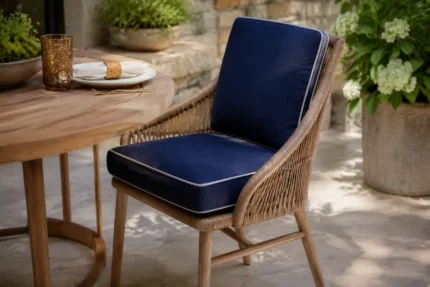
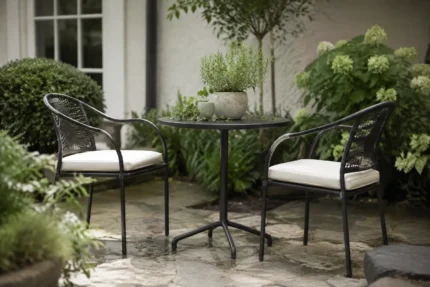
Custom Patio Chair Cushions
- Cut to your exact measurements — any patio set, any brand, any fabric.
- 119 performance fabrics at one price — full-sun and quick-dry outdoor lines included.
- One order, one dye lot — every piece in the run ships color-matched.
- Factory-direct from $106 — instant quote in the customizer below.
- ±½″ tolerance, re-checked before cutting — remade free if we cut it wrong.
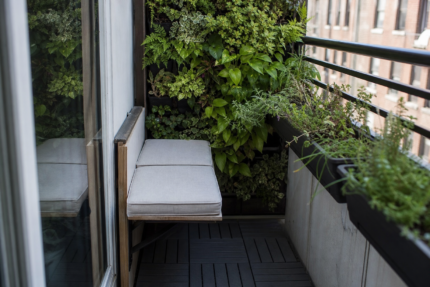
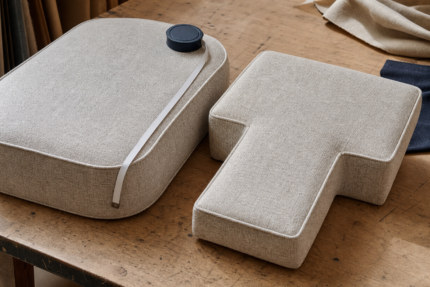
Custom Patio Cushions
- Cut to your exact measurements — dining chairs, deep seating, benches, chaises and swings, any shape.
- 119 performance fabrics at one price — full-sun and quick-dry outdoor lines included.
- One order, one dye lot — the whole patio set ships color-matched.
- Factory-direct from $88 — instant quote in the customizer below.
- ±½″ tolerance, re-checked before cutting — remade free if we cut it wrong.
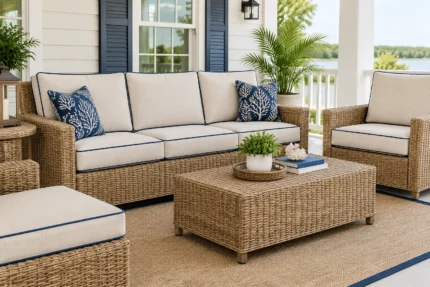
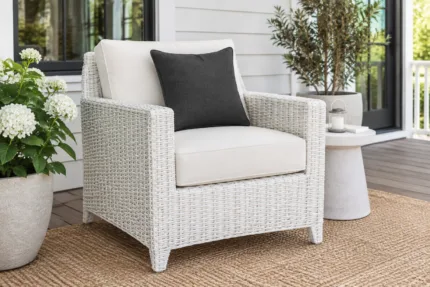
Custom Wicker Cushions
- Cut to your exact measurements — rattan, resin wicker, any weave.
- 119 performance fabrics at one price — full-sun and quick-dry outdoor lines included.
- One order, one dye lot — every piece in the run ships color-matched.
- Factory-direct from $106 — instant quote in the customizer below.
- ±½″ tolerance, re-checked before cutting — remade free if we cut it wrong.

Replacement Patio Cushions
- Replacement patio cushions cut to your measurements — one seat pad or the full set, no minimum.
- 119 fabrics at one price — solution-dyed acrylic, olefin blends and covered-porch weaves in one order.
- Quick-dry reticulated foam for uncovered sets — drains in seconds, dries in hours.
- Measured shelves for Hampton Bay (24 series) and Martha Stewart (7 series) patio lines.
- Cut to a ±½" tolerance — outside it, remade free, any time. From USD 94 a seat.