
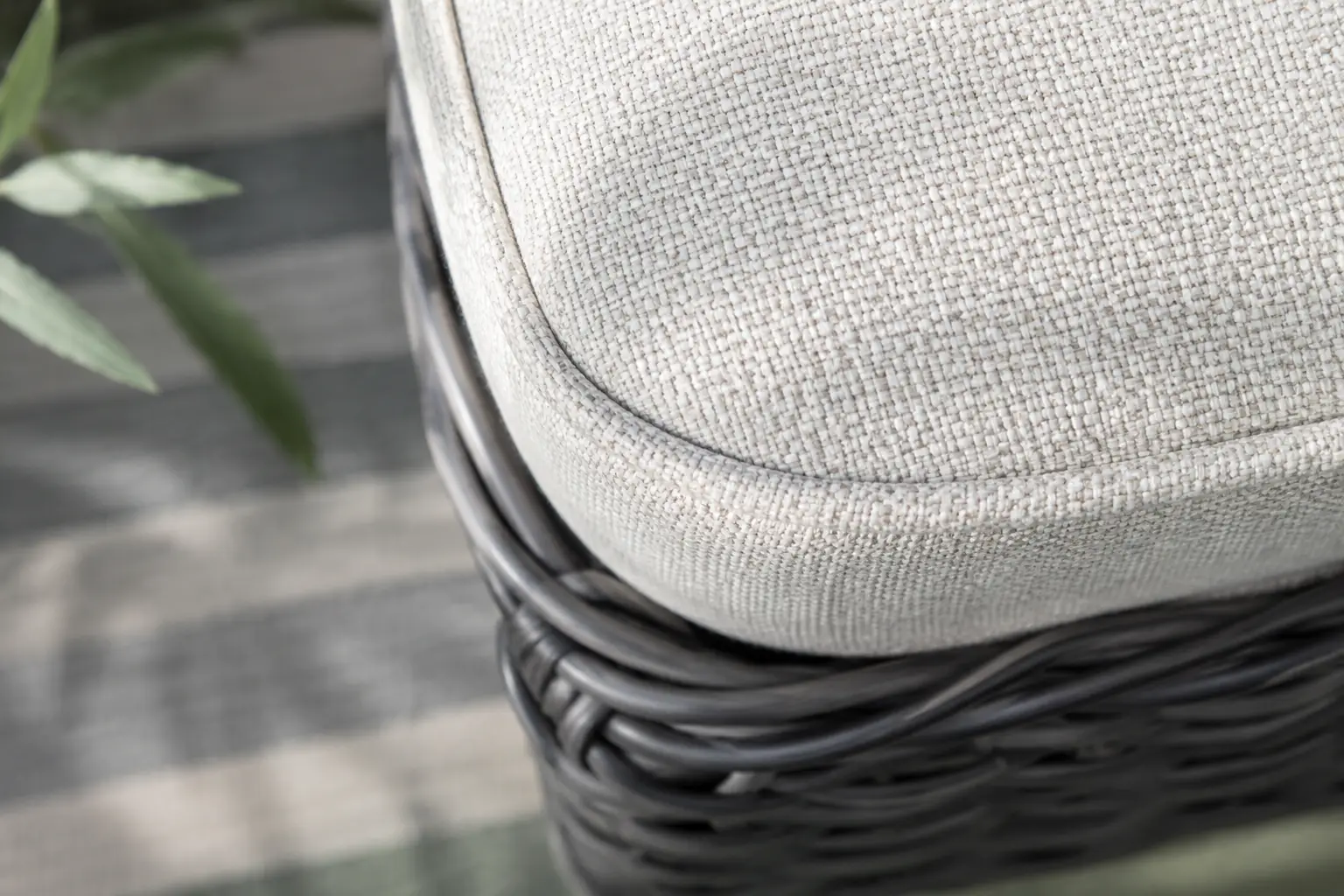
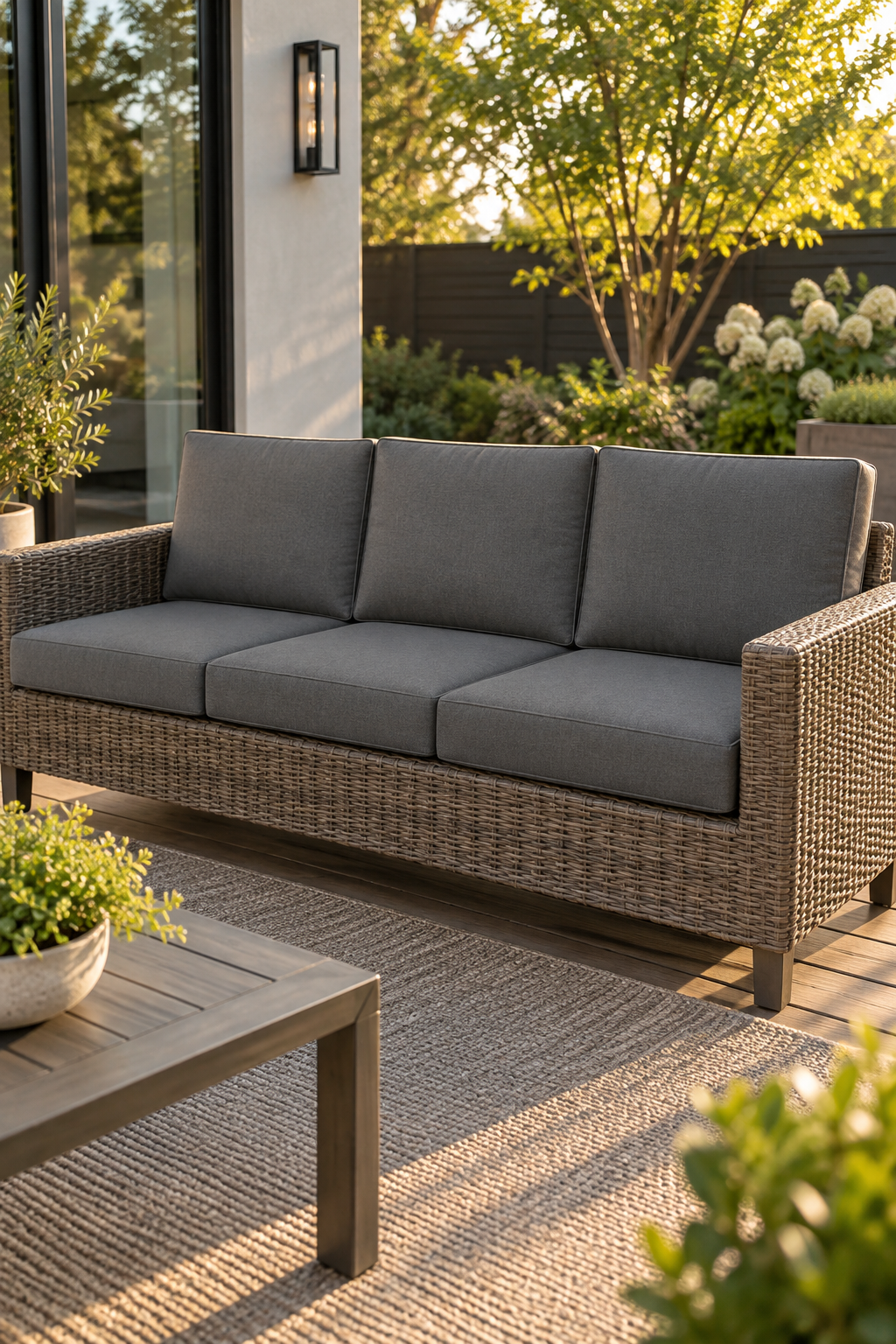
Frames and cushions fail on different schedules, and almost nobody services them together — the furniture gets its annual tightening, the pads get ignored until they embarrass somebody. A Tolston set kept a decade deserves better arithmetic than that: one maintenance calendar that reads both clocks at once and tells you which expense is actually due.
Two clocks, one piece of furniture
The frame clock runs slow and mechanical. Welded and woven joints loosen under load cycles; hardware works loose a quarter turn at a time; wicker surfaces collect grit that grinds fibers at flex points. Left alone for years, the damage compounds — but caught seasonally, it takes minutes of wrenching and wiping to reset. A well-kept frame outlives several generations of cushions.
The cushion clock runs fast and chemical. Foam oxidizes and compresses from the first week of service; fabric takes ultraviolet and moisture damage that accumulates invisibly and then appears all at once; seams flex twice per sit-down. The practical consequence is a repeating mismatch: the frame, serviced, keeps asking for another decade, while the pads quietly arrive at end-of-life on their own schedule that nobody wrote down.
The mismatch is the expensive part. Pads run to failure on a healthy frame and the sitting experience degrades so gradually that “the furniture is getting old” becomes the household verdict — when the furniture is fine and only its consumable layer has expired.
A calendar that reads both clocks
The fix is bureaucratic on purpose — a checklist attached to the seasons:
- Spring opening: frame first — walk every joint with a wrench, tighten hardware, wipe wicker or steel with mild soap, touch up finish wear. Then the pads — press-test each seat’s foam through the cover; a cushion that stays dented several seconds after pressure has entered its compression endgame.
- Mid-summer: a two-minute audit — rotate cushions seat-to-back and left-to-right to spread wear, check covers at the seams for thread wear, and note any piece consistently left in weather it was not built for.
- Fall closing: frames get a final tightening and dry storage; cushions get dried fully, zipped off, washed, and stored flat — dry, because a pad put away damp mildews by February.
Run the calendar twice and a pattern emerges: frames need attention roughly annually, while seating-use foam announces itself every four to seven seasons depending on density and traffic. Once the pattern is visible, re-cushioning stops feeling like a failure and starts reading as scheduled maintenance — which is exactly what it is.
Frame care that actually earns its minutes
Most “maintenance” performed on patio furniture is ritual rather than maintenance — a hasty wipe with whatever is handy, bolts ignored until something squeaks. The minutes that matter are narrower and cheaper. Hardware first: a single pass with the right wrench each spring, working bolt by bolt, catches the quarter-turn loosening that becomes a sway by August. Wicker surfaces want a dry-brush pass along the weave lines to evacuate the grit that saws at fibers at every flex — a soft brush and five minutes per piece, no soap needed. Steel wants its rust spots touched up while they are still spots: sand lightly, match the paint, seal. Finish with a rinse that ends dry — furniture washed and left wet in shade is furniture bathed on a countdown.
The cushions’ side of the partnership is mostly about what they do not do: pads stored dry, off the ground, and off the frames through the off-season never slowly weather the decks they sit on. A cushion left out all winter does more damage to the frame beneath it — trapped moisture against weave or steel — than a season of sitting does. That asymmetry surprises people: the most protective thing you can do for a Tolston frame is to remove its cushions each fall. The calendar above builds that habit in as the closing entry, which is why the fall line item reads “dried fully, washed, stored flat” and not “left where they were”.
Confirming the set is a Tolston
Identification follows the standard ladder for uncharted Hampton Bay lines. First, the white tag under a seat frame — the model number usually trails a GLD or THD supplier code, and a legible tag outranks every other clue. Second, your Home Depot order history or the original assembly leaflet, either of which names the series outright. Third, when paperwork is gone, the era-typical steel or wicker-over-steel build plus photos sent to the bench narrows the line — arm profile and weave pattern do most of the work.
One caveat the calendar makes obvious: Hampton Bay refreshed series across model years, so a same-name set can mix lofts and seat depths between pieces bought in different seasons. The specification we cut to is therefore your own — width, depth and thickness at the seam per cushion, laid out in the measurement guides. No Tolston chart was ever published for a chart to disagree with you about.
Specifying the replacement layer
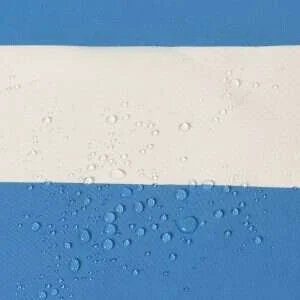
When the calendar says the foam is due, the rebuild specifies three things: dimensions from your own tape, a density matched to how the set is actually used, and a fabric matched to where it sits. Density runs 35D–65D — daily-dining seating earns the 55D–60D band for shape retention across years of compression cycles, occasional pieces live happily at 45D–50D. Fabric splits three ways across the menu’s 119 flat-priced options: water-resistant tech fabric for open sky, cotton linen for covered corners, velvet where claws and constant lounging are factors. Every cover zips off the foam for washing, so the fall-closing wash step is a machine cycle, not an afternoon with a brush. Each cushion opens at a $45 make-base and scales with size and the density chosen.
Series neighbors Tacana and Tramore follow the same measured route. A charted series reference starts at Kampar, and the Hampton Bay hub indexes every line we track.
Frequently asked questions
How do I know the frame is worth re-cushioning?
Run the spring half of the calendar: if joints tighten true, nothing sways after hardware is snugged, and the weave or finish carries no structural breaks, the frame has years left and new pads are an investment in it. Frames that stay loose after tightening have reached their own end of life.
What signals that the foam is finished rather than just tired?
The press test: press a hand into the seat and release. Foam that recovers in a second or two has service left; foam that holds the dent for several seconds, or feels like fabric-wrapped board when you sit, has compressed past its working range. Persistent bottoming-out on the frame is the final stage.
Can I replace covers now and foam later?
You can, though doing them together prices out more coherently — each piece opens at a $45 make-base and scales with size and density, and a full rebuild avoids paying twice for the same cutting bench time. Staged projects are welcome when budgets want them split.
Which density suits furniture used most weekends?
Regular hosting earns 55D–60D — the band that keeps its shape through years of compression cycles on a well-kept frame that deserves pads with matching longevity. Occasional sets sit plusher at 45D–50D; the full dial runs 35D to 65D.
How long does a scheduled re-cushioning take to arrive?
Standard sewing occupies 4–7 business days, a rush runs 3–5, and freight adds 3–6 weeks to most US addresses — which is why the fall-closing audit is the right moment to order: new pads arrive as the season opens.
Do I need the series name to place the order?
No — the order runs on your measurements. The name mainly prevents you from hunting a published chart that never existed; photos to the workshop resolve remaining doubts before anything is cut.
What ordering from this bench gets you
- Cutting, filling and sewing under one roof for over ten years — quoted and built by the same hands, nothing brokered out.
- Every submitted figure re-verified against piece count before fabric is unrolled — the same discipline the calendar above runs on your frame.
- No minimums — the two chairs that took the weather, or the whole set on its second layer of pads, any of 119 fabrics at flat pricing.
- Remake terms without negotiation: outside the ±½″ tolerance (±¾″ past 36″), wrong fabric, wrong build — redone on our account.
Tolston replacement cushions as scheduled maintenance for a frame worth keeping — from a $45 make-base, on the calendar, not in crisis.
Press test came back ambiguous? Send photos of the pads and frame and we will read the clocks with you. Not a Tolston after all? Any shape, custom built — or start from the Hampton Bay index.
Shipping & Delivery
- Orders over $158 ship free — add a second cushion or an upgrade and shipping’s on us.
- Smaller orders ship anywhere in the contiguous US for one simple flat fee — always shown before you pay.
- Made in 7–14 business days. Each cushion is cut and sewn to your measurements after you order, never pulled from a shelf.
- ±½″ tolerance on all custom cuts — and if we cut it wrong, we remake it free. No forms, no fine print.
Have a deadline? Contact us before ordering and we will tell you honestly whether we can meet it.
Related products

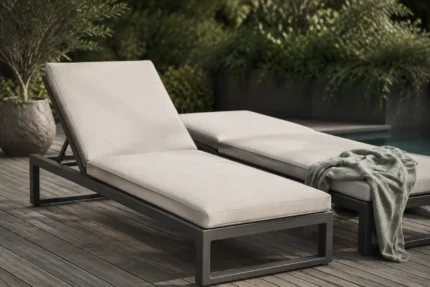
Custom Chaise Lounge Cushions
- Cut to your exact measurements — any chaise, any brand, any fabric.
- 119 performance fabrics at one price — full-sun and quick-dry outdoor lines included.
- One order, one dye lot — every piece in the run ships color-matched.
- Factory-direct from $244 — instant quote in the customizer below.
- ±½″ tolerance, re-checked before cutting — remade free if we cut it wrong.
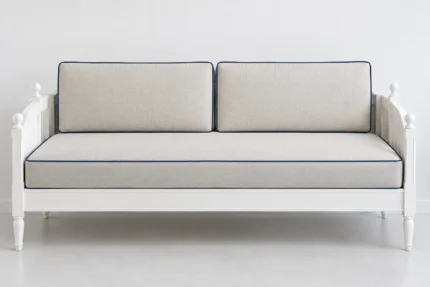
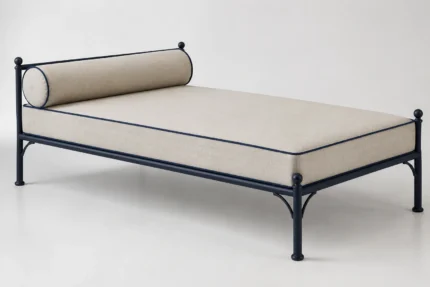
Custom Daybed Cushions
- Cut to your exact measurements — indoor daybeds, patio daybeds, cabana sections.
- 119 performance fabrics at one price — full-sun and quick-dry outdoor lines included.
- One order, one dye lot — every piece in the run ships color-matched.
- Factory-direct from $558 — instant quote in the customizer below.
- ±½″ tolerance, re-checked before cutting — remade free if we cut it wrong.
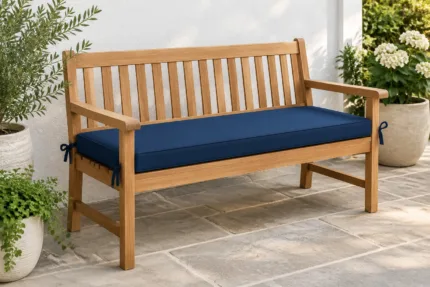
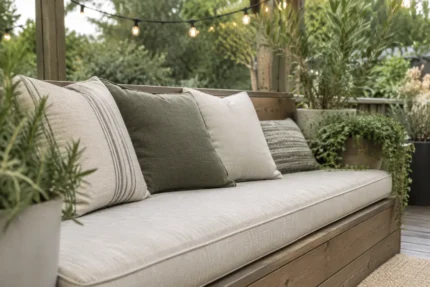
Custom Outdoor Bench Cushions
- Cut to your exact measurements — patio, garden and deck benches.
- 119 performance fabrics at one price — full-sun and quick-dry outdoor lines included.
- One order, one dye lot — every piece in the run ships color-matched.
- Factory-direct from $130 — instant quote in the customizer below.
- ±½″ tolerance, re-checked before cutting — remade free if we cut it wrong.
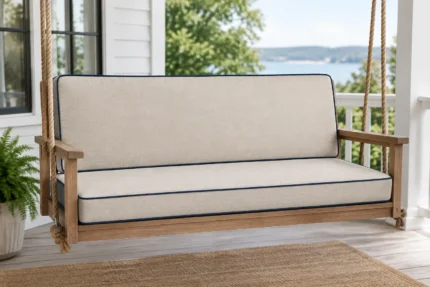
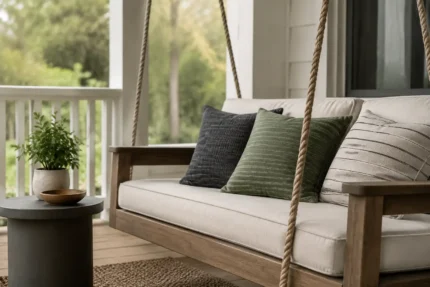
Custom Outdoor Swing Cushions
- Cut to your exact measurements — any swing, any frame, any fabric.
- 119 performance fabrics at one price — full-sun and quick-dry outdoor lines included.
- One order, one dye lot — every piece in the run ships color-matched.
- Factory-direct from $142 — instant quote in the customizer below.
- ±½″ tolerance, re-checked before cutting — remade free if we cut it wrong.