
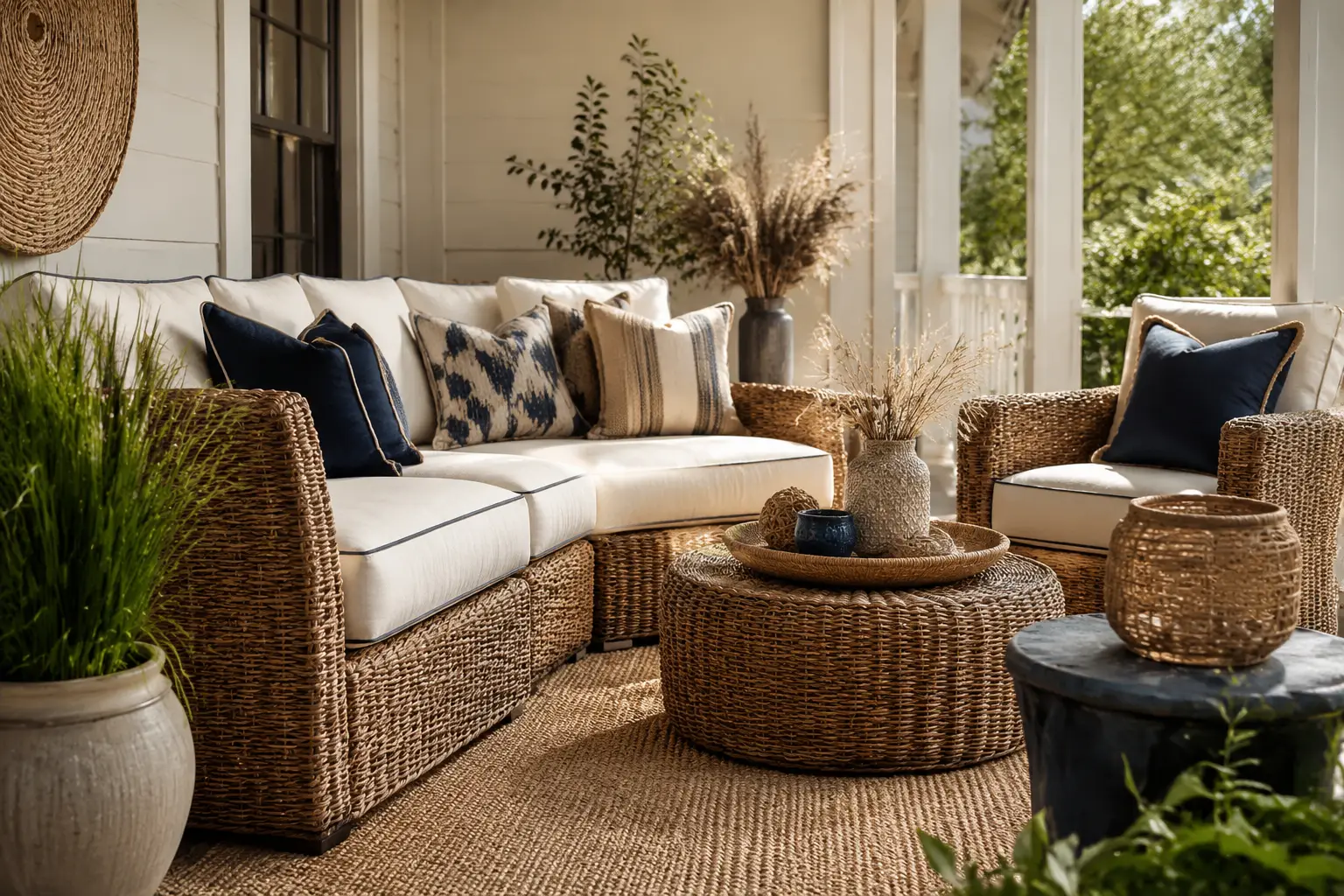
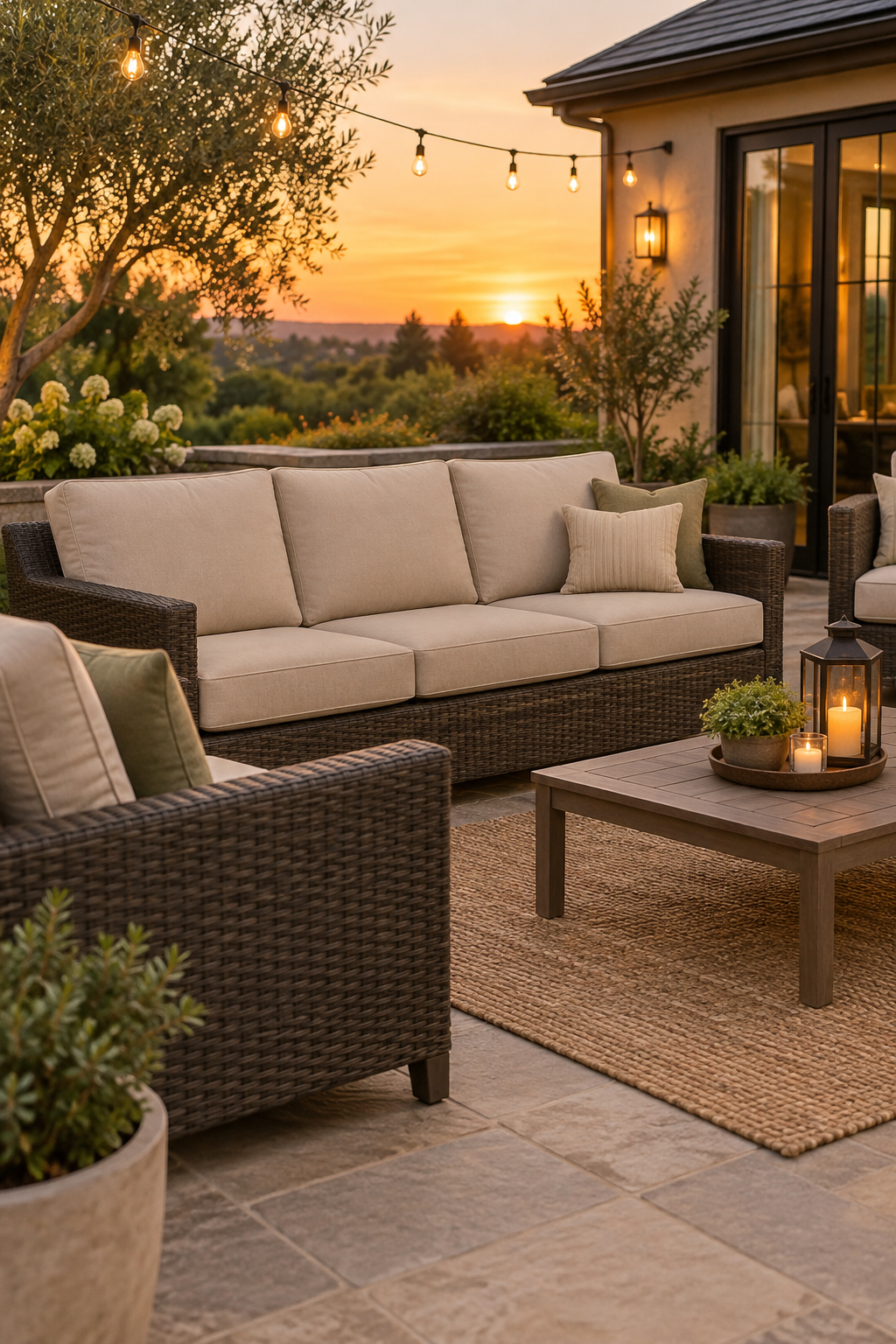
Sell a patio set and the buyer decides in the first photograph. The frames might be immaculate — welded joints sound, wicker tight, powder coat whole — but if the Sanopelo cushions in that photo are sagged, grayed, and hemorrhaging foam through a split seam, the listing has already whispered its verdict: tired set, lowball incoming. Buyers price what they can see, and what they can see is the cushions. Everything else is a paragraph in the description nobody reads.
What buyers actually appraise
Secondhand furniture shoppers run a fast, ruthless checklist, and cushions fail it before frames get a look. The first test is the photograph: plump, clean, evenly colored pads signal a set that was maintained; hollowed seats and mismatched fade say the opposite, fairly or not. The second test happens at the viewing — the sit. A buyer drops onto the club chair, and either the seat catches them or it doesn’t; a bottomed-out cushion turns every subsequent inspection skeptical. The third test is the mental subtraction they never announce: this needs new cushions, that’s two hundred bucks and a measuring hassle — and their offer drops by more than the cushions would have cost you.
The asymmetry is what makes cushions the highest-leverage line item in a patio listing. Frames hold or they don’t; nobody repaints a patio set for sale. But cushions photograph today, sit today, and can be replaced in a week — at a cost that is routinely smaller than the offer erosion they prevent. Sellers who refresh pads before listing are not polishing a product; they are deleting the buyer’s favorite negotiation point.
The pre-listing refresh, honestly budgeted
The move is not cosmetic trickery — it is meeting the market’s standard. Fresh cushions cut to the set’s own measurements put the photograph, the sit, and the buyer’s mental math all on your side of the table. A few principles keep it honest and cheap:
- Rebuild the whole visible set, not one piece. One new chair cushion beside five tired ones announces the set’s age more loudly than six tired ones do. Orders here carry no minimum and no per-piece penalty, so a full six-seat refresh prices as six straightforward cushions, each from the $45 make-base.
- Choose cloth that photographs calm. Mid-tone neutrals and quiet textures read as “ready to use”; bold personal patterns narrow your buyer pool to whoever shares the taste. All 119 fabrics price flat at a given size, so the market-sensible choice is never the expensive one.
- Set density to impress the sit. Seats in the 60D neighborhood and backs near 50D — within the 35D to 65D menu — give the viewing its small moment of surprise: oh, these are good. Firmer foam is the difference between furniture that feels sold and furniture that feels sorry.
Then present the rebuild as a selling line, because it is one: “cushions replaced this season with washable zip-off covers” is a fact a buyer can verify by unzipping a seat at the viewing — and it reframes the entire set as maintained rather than moved-along.
Keeping the new set new until the sale
Listings have a half-life; sometimes the set sits on the market for a season. Protect the investment you just dressed it with. Photograph everything on day one, in the best light the yard offers, before a single bird has opinions about the fresh cloth. Between showings, keep the pads covered or stacked indoors if the listing drags past a month — every cover unzips fully for machine washing, so a mid-listing freshen-up (one wash cycle, dry completely, back on) restores the photographed look without buying anything twice. And if the sale concludes quickly, congratulations: the cushions that closed the gap between ask and offer cost less than the gap.
The reverse scenario deserves a line too: sometimes the seller keeps the cushions and lets the frames go bare. That trade rarely wins. Used cushions tailored to one specific frame have almost no market on their own, while a listed set wearing them photographs and sits like the maintained furniture it now is. Cushions belong to the set they were cut for — at listing time, at least.
Naming the frames for the listing copy
Sanopelo is one of the Hampton Bay lines the bench tracks without an official chart — known through retail listings and owner reports, dimensions never formally published. Naming it strengthens a listing (“Hampton Bay Sanopelo, model verified”) and takes minutes: the white tag under a seat frame carries the model number beside its GLD or THD supplier prefix; the original Home Depot order or assembly leaflet answers just as fast; and if both are gone with the moving boxes, photos of the frames sent to the bench narrow the construction era. Whatever the name, the cutting specification for the refresh is the three dimensions per cushion — width, depth, thickness at the seam, per the measuring guides — since same-name sets across years can carry different lofts.
The economics, plainly
A pre-sale refresh prices like any order here: per cushion from a $45 make-base, moved only by finished size and the density picked within 35D to 65D, with all 119 fabrics flat at a given size. Run the comparison against the alternative — listing as-is and absorbing the buyer’s cushion deduction, which their agent will happily itemize — and the refresh usually wins by arithmetic, not by staging instinct. It also carries the option value of a faster sale: dressed sets photograph better, photograph better means clicked more, and clicked more means fewer weeks of the listing aging in public.
Neighbor series without charts: Rossano and Tacana. The charted Melbourne page shows an official spec for contrast, and the Hampton Bay hub indexes every line the workshop tracks.
Frequently asked questions
Do new cushions really raise a used set’s price?
They remove the discount more reliably than they add to the ask. Buyers mentally deduct the cost and hassle of re-cushioning — usually more than cushions actually run — so fresh pads delete their strongest lever. Whether you then hold your price or sell faster is market timing; either outcome beats negotiating against a sagging seat.
Should I refresh all the pieces or just the worst?
All the visible ones. A single new cushion beside worn companions makes the wear legible instead of deniable — buyers instantly rank every piece by age. With no minimum order and flat per-piece pricing from $45, the full set refresh is the version that photographs as one coherent thing.
What fabric suits a set going to market?
Mid-tone neutrals with quiet texture — they read as clean and ready rather than as somebody’s specific taste, and they widen the buyer pool. Every one of the 119 fabrics costs the same at a given size, so the market-safe choice never carries a premium.
How firm should sale-staging cushions be?
Firm enough to pass the sit test at the viewing: seats near 60D, backs near 50D from the 35D to 65D menu. The moment a buyer sits and the seat holds, the frame’s age stops being the story — and that is the whole staging goal.
Can I keep the new cushions and sell the set bare?
Technically yes, strategically almost never. Cushions cut to one frame have no second market apart from that frame, and a bare used set sells as a project. The pads are worth the most attached to the furniture they were measured for.
How long before listing day should I order?
Count on 4 to 7 business days of standard sewing, 3 to 5 rushed, plus 3 to 6 weeks of freight to most addresses — so the refresh belongs to the same prep sprint as the photos and the listing copy, not to the weekend before the first showing.
What ordering from this bench gets you
- One independent workshop, cutting, filling, and sewing in-house for over a decade — quoted and built by the same hands.
- Figures checked against your declared piece count before any fabric is cut, so the set that ships is the set your frames wear.
- No minimums, no stock calendar — one staging chair or the full marketplace set, in any of the 119 flat-priced fabrics.
- Remake terms in plain sight: any cut outside ±½″ (±¾″ past 36″), or the wrong cloth or build, remade free.
Sanopelo replacement cushions that turn “make me an offer” back into a listed price — from a $45 make-base, dressed for the photographs that decide the sale.
Selling and want the cloth sanity-checked against your photos? Send the listing draft and the desk will suggest tones that photograph well. Different series on the block? Any frame, cut to your figures — or see the Hampton Bay index.
Shipping & Delivery
- Orders over $158 ship free — add a second cushion or an upgrade and shipping’s on us.
- Smaller orders ship anywhere in the contiguous US for one simple flat fee — always shown before you pay.
- Made in 7–14 business days. Each cushion is cut and sewn to your measurements after you order, never pulled from a shelf.
- ±½″ tolerance on all custom cuts — and if we cut it wrong, we remake it free. No forms, no fine print.
Have a deadline? Contact us before ordering and we will tell you honestly whether we can meet it.
Related products
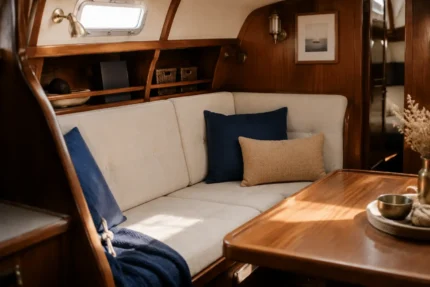
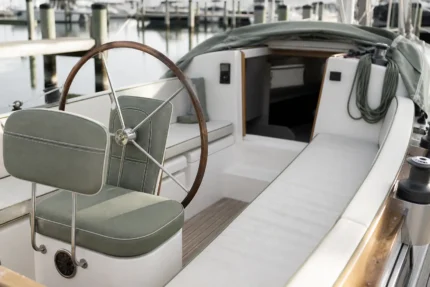
Custom Boat Cushions
- Cut to your exact measurements — berths, settees, dinettes, bolsters.
- 119 performance fabrics at one price — full-sun and quick-dry outdoor lines included.
- One order, one dye lot — every piece in the run ships color-matched.
- Factory-direct from $290 — instant quote in the customizer below.
- ±½″ tolerance, re-checked before cutting — remade free if we cut it wrong.
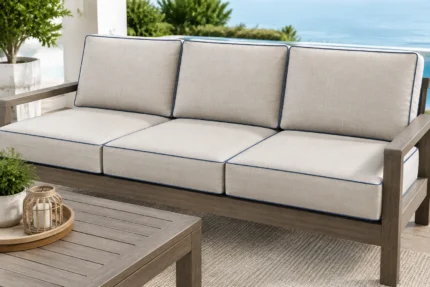
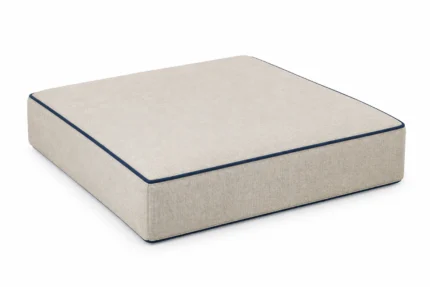
Custom Deep Seat Cushions
- Cut to your exact measurements — any deep-seating frame, any brand.
- 119 performance fabrics at one price — full-sun and quick-dry outdoor lines included.
- One order, one dye lot — every piece in the run ships color-matched.
- Factory-direct from $172 — instant quote in the customizer below.
- ±½″ tolerance, re-checked before cutting — remade free if we cut it wrong.
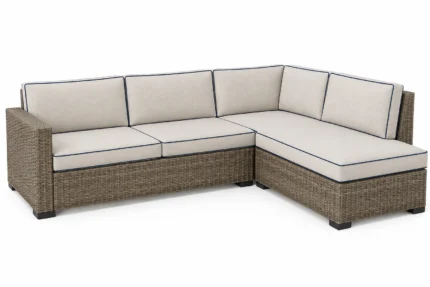
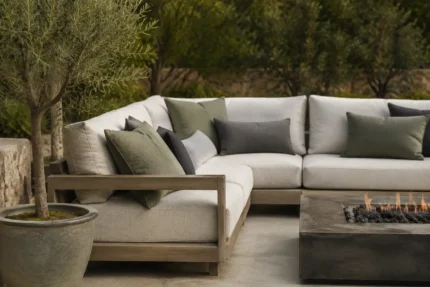
Custom Sectional Cushions
- Cut to your exact measurements — seats, corners, chaise ends, backs.
- 119 performance fabrics at one price — full-sun and quick-dry outdoor lines included.
- One order, one dye lot — every piece in the run ships color-matched.
- Factory-direct from $162 — instant quote in the customizer below.
- ±½″ tolerance, re-checked before cutting — remade free if we cut it wrong.
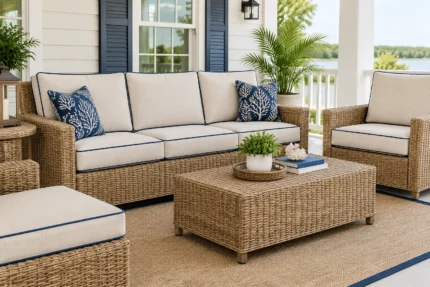
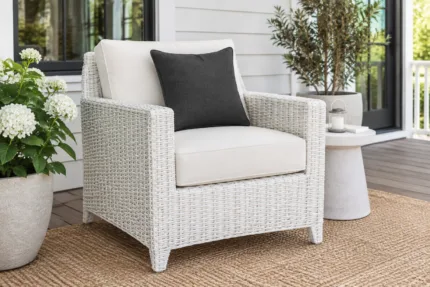
Custom Wicker Cushions
- Cut to your exact measurements — rattan, resin wicker, any weave.
- 119 performance fabrics at one price — full-sun and quick-dry outdoor lines included.
- One order, one dye lot — every piece in the run ships color-matched.
- Factory-direct from $106 — instant quote in the customizer below.
- ±½″ tolerance, re-checked before cutting — remade free if we cut it wrong.