
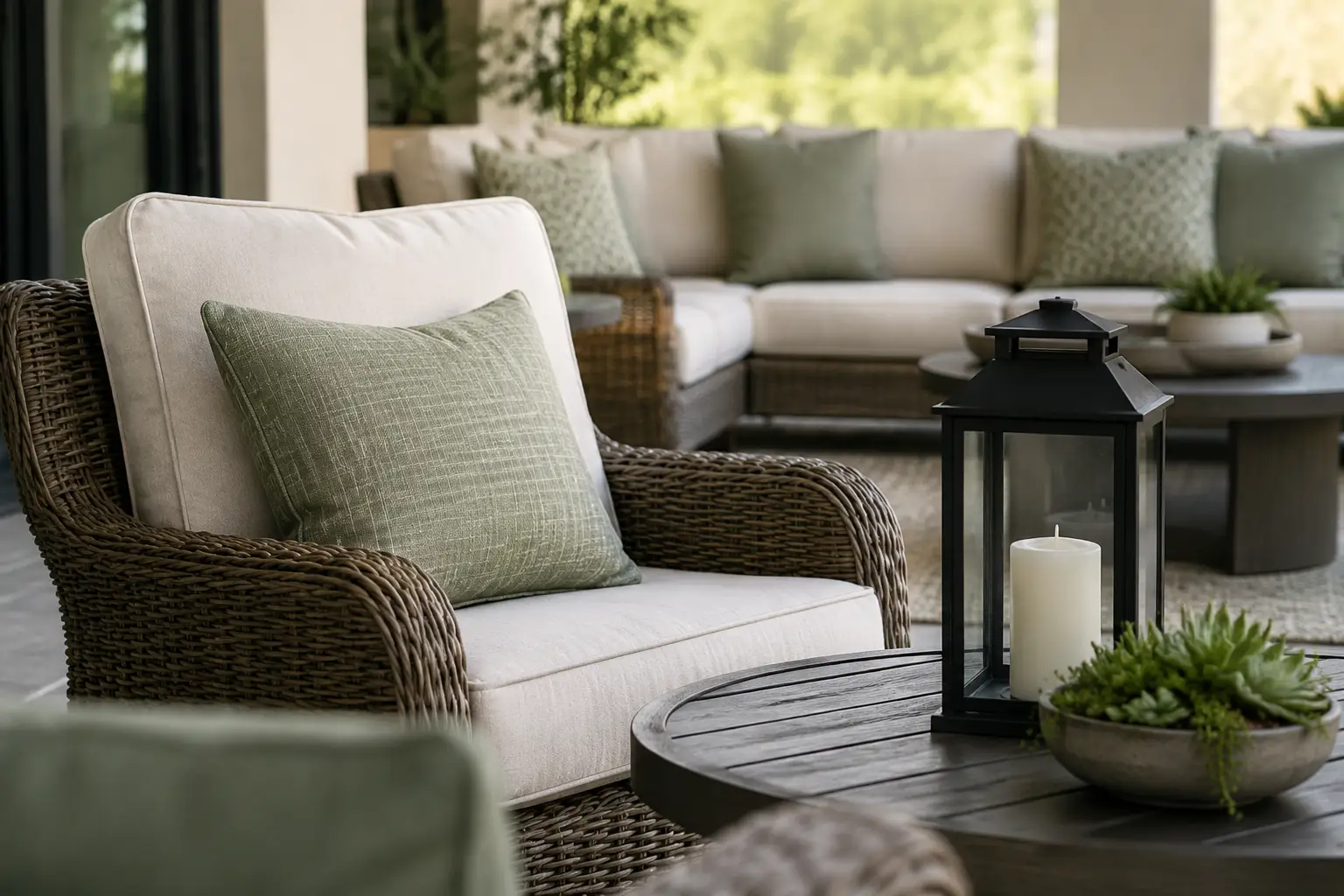
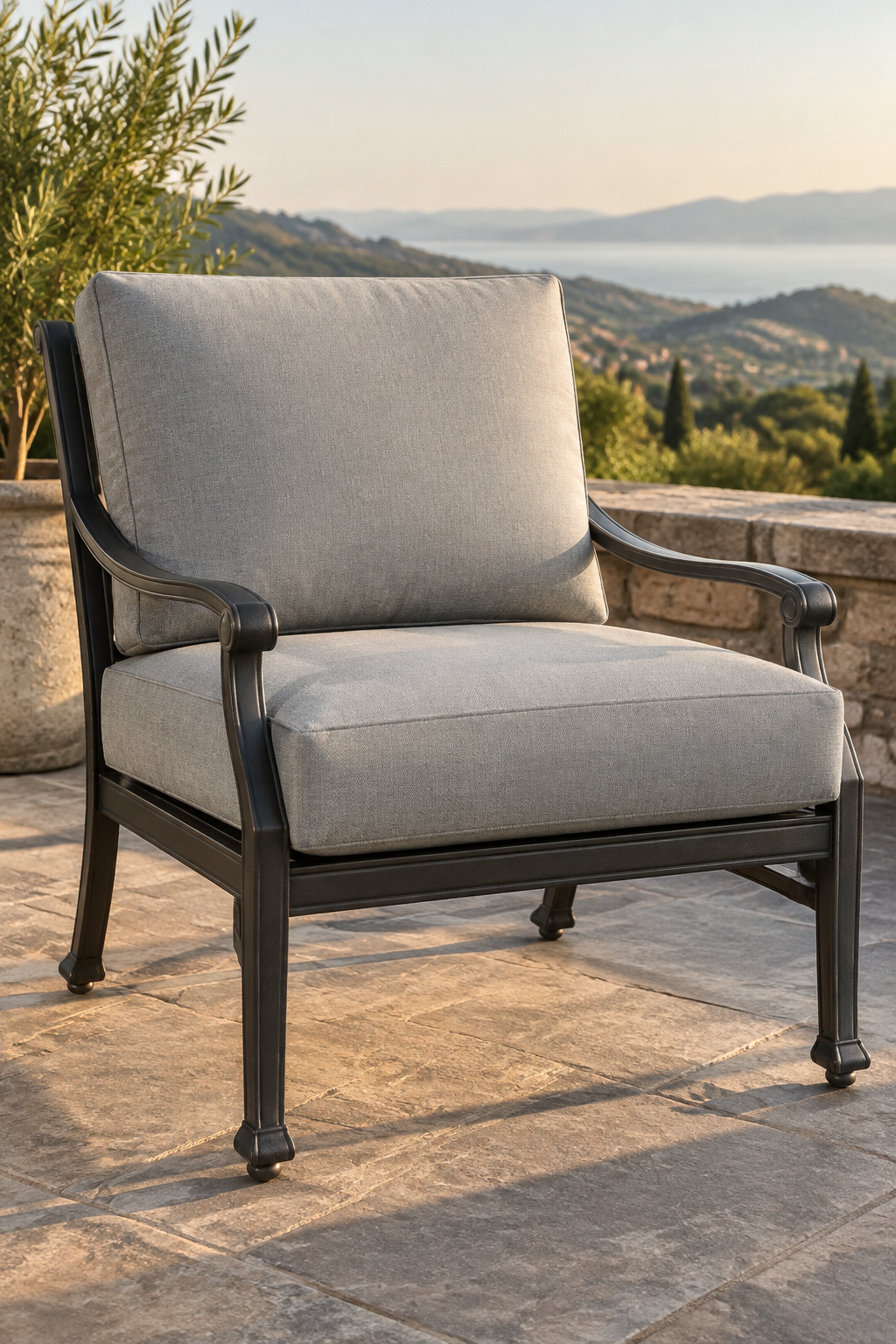
Most patios run their cushions into the ground one set at a time. The Rock Cliff frame out front gets the same pads, every day, every season, until the foam goes flat and the covers go gray — and only then does anyone shop. There is a second schedule: two sets, alternating. It sounds like an indulgence until you do the arithmetic, because a cushion that spends half the year in a dark box ages at roughly half the speed of one that never leaves the frame.
Why a second set changes the math
Cushions die from two clocks running at once. The first is exposure: ultraviolet hours, rain cycles, and the slow grit that works into weave every time someone sits down. The second is load: the same two seat positions compressed day after day, the same back-rests absorbing the same lean. Neither clock cares how nice the fabric was. What they respond to is time in service.
A rotation pair splits that time. Set A lives on the Rock Cliff frames from spring through midsummer; Set B takes over while A rests in storage; they swap again before frost. Each set now absorbs roughly half the solar dose and half the sitting hours it otherwise would — and in practice the pair tends to outlast two consecutive single sets bought in sequence, because neither set ever reaches the sagging, faded end-game where covers tear at the seams from foam that no longer holds its shape. You are not buying more cushion; you are buying slower wear per set.
There is a quieter benefit owners mention more than any other: the swap itself. Twice a year the patio looks new again, because the fresh set arrives crisp while the retired one carries the season’s story. A rotation calendar gives you a built-in reset without buying a new look — and when one set eventually does need a rebuild, the other covers the gap so you are never sitting on bare frames during production weeks.
Storing the off-duty set without ruining it
The way cushions spend their off-season decides whether rotation is a preservation strategy or a slow wrecking. Four rules cover nearly all of it:
- Breathable containment, never sealed plastic. A lidded canvas bin, a cotton storage bag, or a shelf inside a shed works; a zip-closed poly bag traps residual moisture against the fabric and invites mildew to spend the winter rent-free.
- Flat, stacked no more than a few deep. Foam stores best lying in its working orientation. A tall pile presses the bottom set all winter; stand nothing on edge, and keep boxes and tools off the stack.
- Dry before it goes in. A set retired after a wet October weekend should air-dry for a day or two first. Storage does not dry cushions; it only preserves whatever moisture you sealed in with them.
- A cool, dark corner. A garage shelf away from the window is ideal. A sunny shed skylight quietly UV-doses the retired set all winter, which defeats the entire arrangement.
When the swap brings a set back out, expect the foam to look briefly defeated. Compressed storage leaves shallow wrinkles and a modest loss of loft that resolves on its own — most pieces fluff back to full height within a day of open air. If a cushion is still obviously down on one side after a few days out of the box, that is not storage flatten; that is compression the set earned in service, and it is the signal to price a rebuild for the following rotation rather than push it another full season.
The handover inspection
Each swap is also a free audit, if you spend five minutes on it. Walk the incoming set before it goes on the frames: press each seat with a flat palm and count how slowly the foam returns; tug every zipper slider once, because a slider that jams now will fail mid-season; run a thumb along the seams looking for thread wear where cover meets cover. Note anything suspicious on the storage bag with a marker — “LF seat slow rebound” saves you from rediscovering it in June.
The outgoing set gets the same five minutes in reverse, plus a wash decision. Covers on every CushionMill build unzip fully for machine washing, and the handover is the natural moment to run the off-duty set through the laundry before it goes dormant — body oils and pollen left in fabric for six months set into stains that were once trivially removable. Wash, dry completely, stack flat: the set goes into hibernation clean, and comes out of it looking like it was bought for the season it is about to work.
Naming your frames before the first order
Rock Cliff belongs to the long list of Hampton Bay lines that shipped without a published cushion chart — the name comes down through retail listings and owner accounts rather than a data sheet. Placing your set is usually fast all the same: the white manufacturer tag hiding under a seat frame carries the model number beside its GLD or THD supplier prefix; a Home Depot order history or the old assembly leaflet does the same job; and if both have vanished, send the bench photos of the frames and we will narrow the field by construction era. One caution applies to a rotation purchase more than a single one: identically named sets from different production years can carry different lofts, so the three figures you take per cushion — width, depth, thickness at the seam, per the measuring guides — outrank the series name on the box.
What the second set costs
Both halves of a rotation pair price identically: each cushion starts from a $45 make-base and moves only with finished size and the density you select anywhere from 35D to 65D. Fabric never enters the price calculation — all 119 options in the swatch menu, from striped canvas to brushed velvet, carry the same figure at a given size, so Set A and Set B can even wear different cloths without a premium for either. Some households deliberately run the reserve set in a tougher fabric and the display set in something prettier; the rotation makes the mismatch invisible because the two are never on the frames together.
Density guidance for patio service has not changed: around 60D under sitting weight and around 50D behind the back keeps the pair supportive without boardy edges, and matching the two sets keeps the patio sitting level after every swap.
Neighborhood series without charts of their own: Posada and Rossano. The charted Melbourne line shows what an official spec looks like on the Melbourne page, and the Hampton Bay index collects every series the bench tracks.
Frequently asked questions
Will cushions stored over winter regain their shape?
Nearly always, yes — mild loft loss from flat, breathable storage works itself out within a day or so of the set being back in open air. Foam that still sits hollow after several days was compressed by service, not by the storage box, and is due for replacement rather than another season.
Is buying two sets genuinely cheaper than one?
Not cheaper per purchase — the outlay doubles — but cheaper per year of good seating. Rotated pairs spend half their life resting, so each set degrades slower and the pair together typically outlasts the two single sets you would have bought back-to-back, with fewer ugly months at the tail of each.
What density suits a rotation pair?
Keep both sets in the working band: about 60D for seats, about 50D for back-rests, chosen anywhere in the 35D to 65D range the menu allows. Matching the two sets matters more than the exact number, so the patio sits identically after each swap.
Do both rotation sets need the same fabric?
Only for visual consistency, never for price or fit. All 119 fabrics price flat at a given size from the $45 make-base, so plenty of owners run the reserve set in a hard-wearing pattern and save the delicate weave for the set that only works half the year.
How far ahead should I order the second set?
Sewing runs 4 to 7 business days as standard or 3 to 5 rushed, with freight adding 3 to 6 weeks to most addresses. Ordering the reserve set while the display set is still healthy removes every deadline pressure — the whole point of a rotation is that no order is ever an emergency.
Can storage replace washing?
No — they solve different problems. Every cover unzips for machine washing, and the handover between sets is the right moment to launder the retiring one: organic residue left in fabric through a long storage stay tends to set, turning a routine wash into a permanent shadow.
What ordering from this bench gets you
- One workshop, in-house start to finish — the same hands cut, fill, and sew every piece, and have for over ten years.
- Figures re-checked against piece count before any cloth is cut — a suspicious measurement triggers a question, not a guess.
- No minimum order and no stock cycle — one spare seat or a complete second set, in any of 119 fabrics.
- Fair-build guarantee: anything outside the ±½″ tolerance (±¾″ past 36″), built to the wrong cloth or the wrong spec, gets remade at no charge.
Rock Cliff replacement cushions bought as a working pair — one on the frames, one in the dark, both aging at half speed.
Want a storage-and-rotation plan mapped to your climate? Tell us your seasons and we will suggest a swap calendar. Different frames after all? Any shape, made to your numbers — or browse the full Hampton Bay catalog.
Shipping & Delivery
- Orders over $158 ship free — add a second cushion or an upgrade and shipping’s on us.
- Smaller orders ship anywhere in the contiguous US for one simple flat fee — always shown before you pay.
- Made in 7–14 business days. Each cushion is cut and sewn to your measurements after you order, never pulled from a shelf.
- ±½″ tolerance on all custom cuts — and if we cut it wrong, we remake it free. No forms, no fine print.
Have a deadline? Contact us before ordering and we will tell you honestly whether we can meet it.
Related products
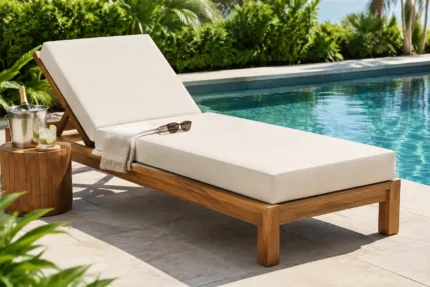
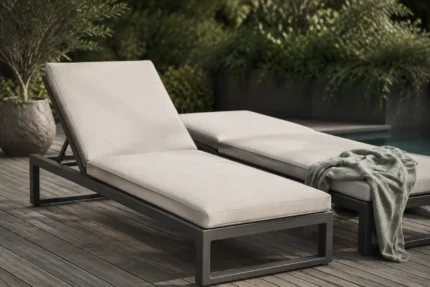
Custom Chaise Lounge Cushions
- Cut to your exact measurements — any chaise, any brand, any fabric.
- 119 performance fabrics at one price — full-sun and quick-dry outdoor lines included.
- One order, one dye lot — every piece in the run ships color-matched.
- Factory-direct from $244 — instant quote in the customizer below.
- ±½″ tolerance, re-checked before cutting — remade free if we cut it wrong.
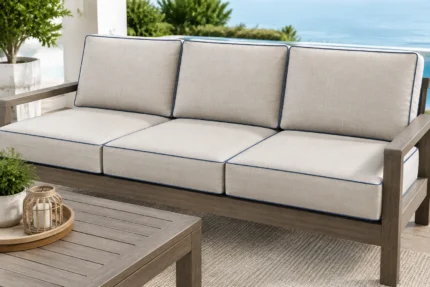
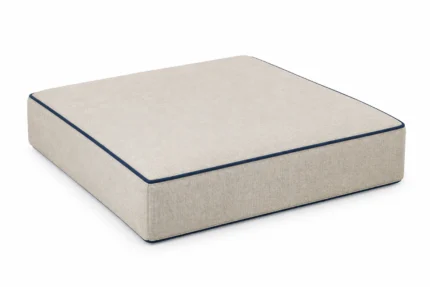
Custom Deep Seat Cushions
- Cut to your exact measurements — any deep-seating frame, any brand.
- 119 performance fabrics at one price — full-sun and quick-dry outdoor lines included.
- One order, one dye lot — every piece in the run ships color-matched.
- Factory-direct from $172 — instant quote in the customizer below.
- ±½″ tolerance, re-checked before cutting — remade free if we cut it wrong.
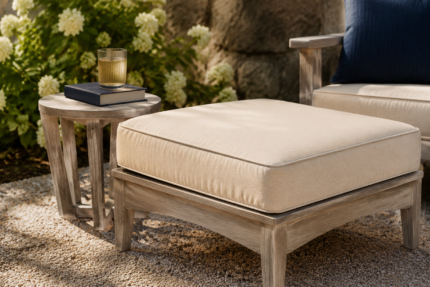
Custom Ottoman Cushions
- Ottoman cushions cut to your measurements — round, oval, square, half-round and wedge tops, no minimum.
- 119 fabrics at one price — covered-porch linens to solution-dyed acrylic with a 5-year fade warranty.
- Rounds price on the bounding square — the published formula the customizer quotes, checkable with a tape measure.
- Cut to a ±½" tolerance — outside it, remade free, any time. From $89.
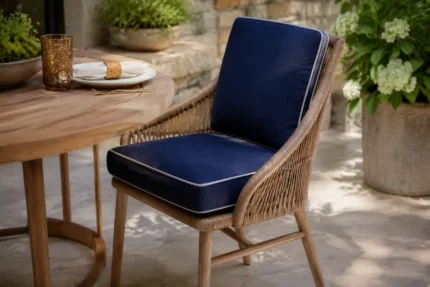
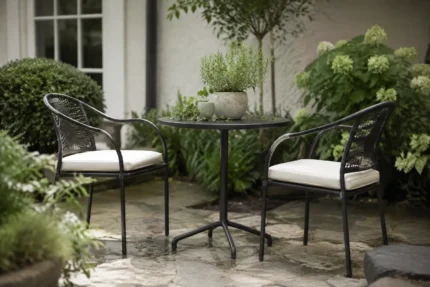
Custom Patio Chair Cushions
- Cut to your exact measurements — any patio set, any brand, any fabric.
- 119 performance fabrics at one price — full-sun and quick-dry outdoor lines included.
- One order, one dye lot — every piece in the run ships color-matched.
- Factory-direct from $106 — instant quote in the customizer below.
- ±½″ tolerance, re-checked before cutting — remade free if we cut it wrong.