
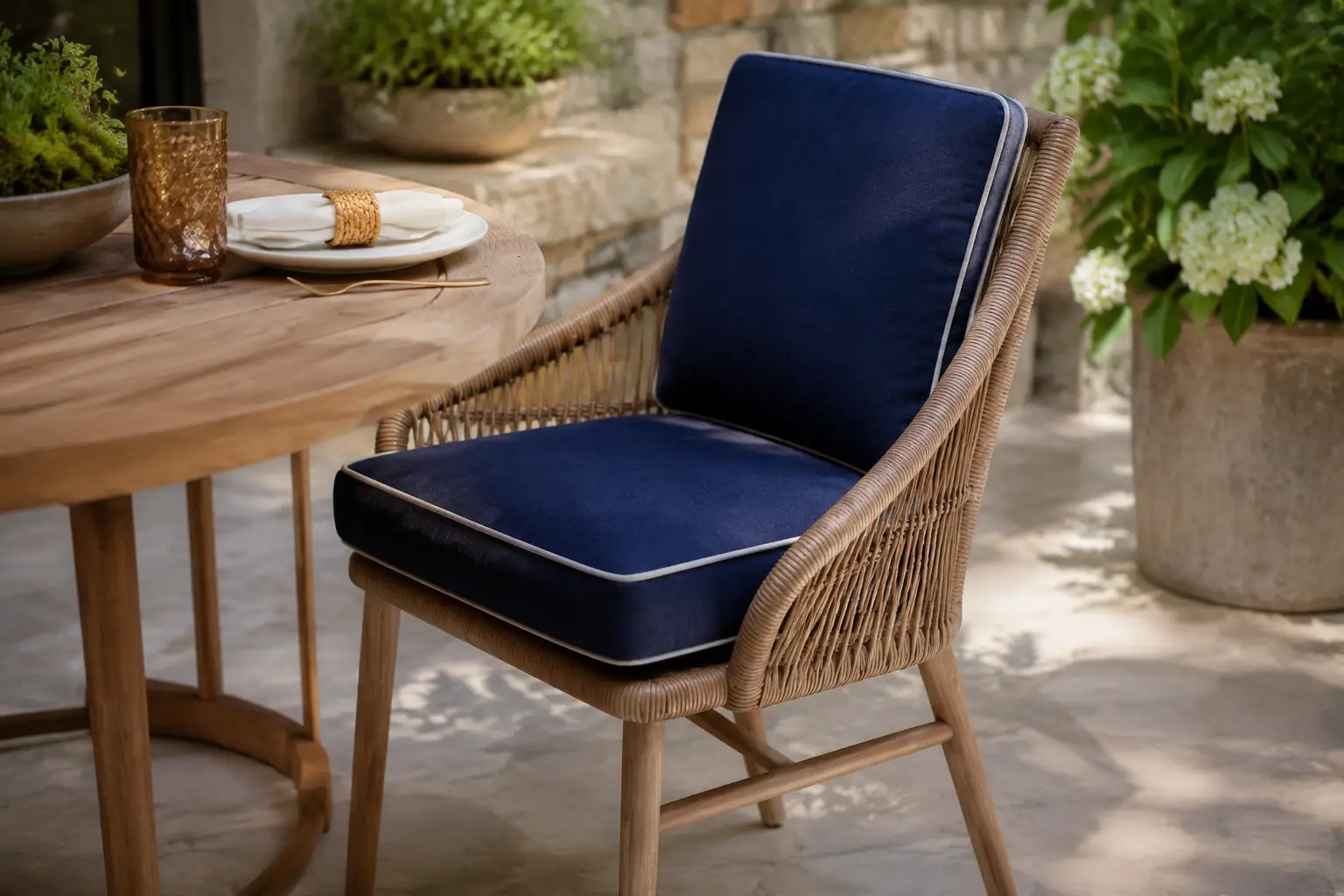
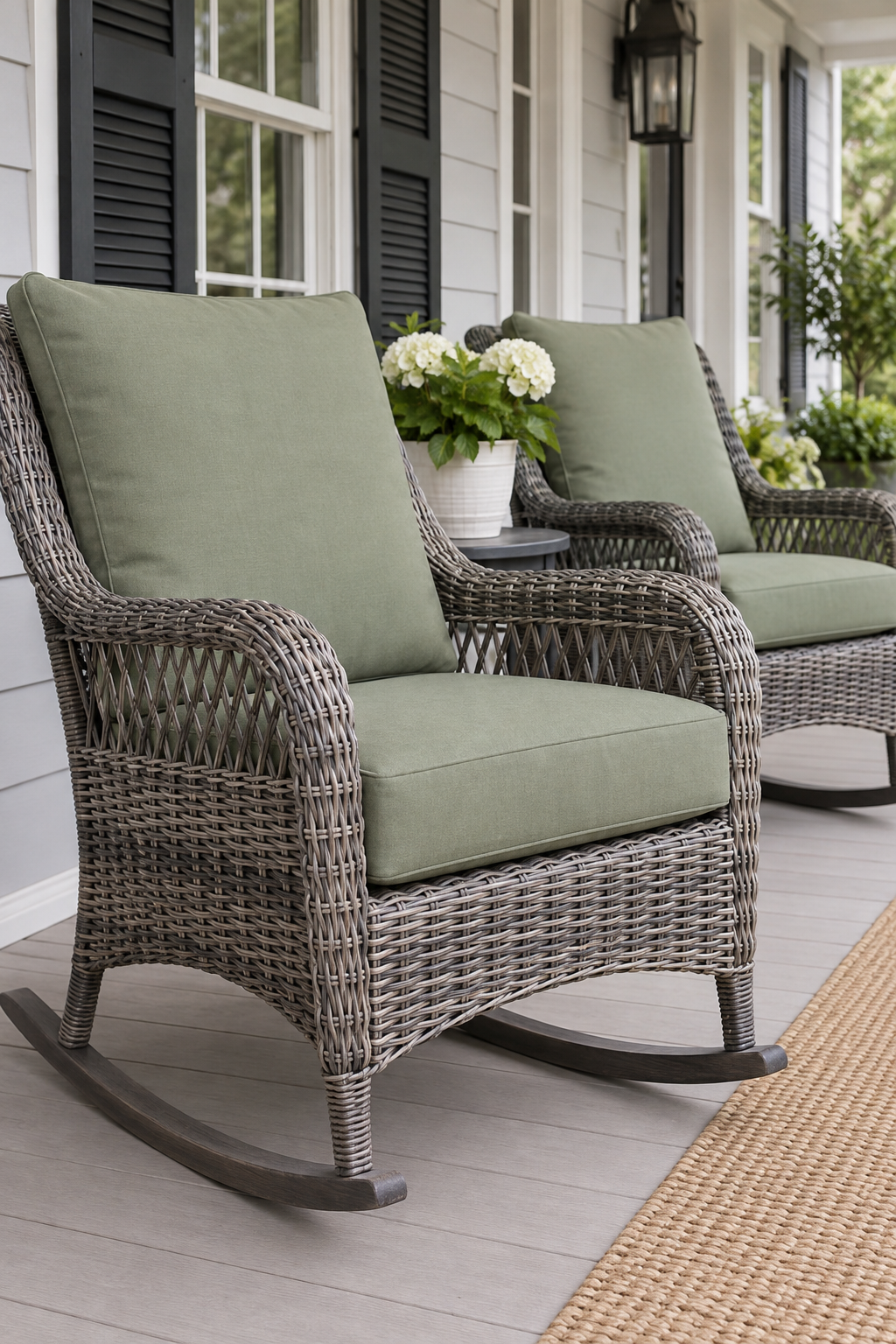
Nobody rearranges a patio by accident. It happens after a party where nobody could get out of a corner chair, or the summer someone installs a projector against the fence and the conversation set is suddenly facing the wrong wall. The Lake Ridge frames get dragged to a new position, everyone steps back to look — and the cushions go back on exactly as they were, because almost nobody realizes a rearrangement is also a measurement event.
Walk it before you measure it
The order of operations separates a patio that works from one that merely looks arranged. Measurement comes after traffic, not before: lay out the new positions loosely — a hose on the ground, chalk on concrete, or the furniture simply parked where it might live — and then live with it for a weekend. Cook a meal, carry plates out, let two people pass each other mid-conversation. Every layout that fails, fails in use, never in the plan view.
The passage arithmetic is unglamorous and decisive. You want roughly a three-foot clear lane on the routes people actually walk — door to table, table to grill, house to gate — and a little more anywhere two people routinely pass. Chairs count as needing pull-back space too: a dining chair demands its own depth again behind it so a seated guest can stand without kissing the hydrangeas. When a layout keeps failing the walk test, the fix is usually subtraction — one chair fewer, or the loveseat rotated — and better to learn that before cushions are cut than after.
What moving the furniture does to your measurements
Here is the part that surprises people: the cushion dimensions themselves rarely change when the set moves. A pad that measured 24 by 22 by 4 inches against the old orientation measures the same three numbers against the new one — the frame did not shrink in transit. What rearrangement changes is everything around the dimensions, and that is what deserves a second look.
Three things specifically. First, ground truth: patios slope, and a set that sat dead level on the old slab may ride a gentle grade in the new corner — visible as a wobble or a lean the cushions will now be blamed for. Shim the frames, not the pads. Second, exposure rotation: the chair that lived shaded will now take the afternoon sun, which is a fabric decision as much as a comfort one — worth a walk past the guides and a hard look at your cloth choice before reordering. Third, the wear map: the same two seats absorbed every sitting for years in the old layout. A rearrangement with a rebuild is the rare chance to reset that — fresh foam erases the old pattern, and the new traffic flow starts everyone on even terms.
Where repositioning does change the pads: sets split up to fill a new space. The club chair moving to the firepit no longer matches its sectional siblings, a bench shortened by a moved planter needs a shorter pad, and corner pieces swapped left-for-right need mirrored cuts. In every one of those cases the old cushions stop being the specification — the frame openings become it, and that means fresh measurements, taken on the bare frames in their final positions.
Thickness is a traffic decision
Rearranged layouts quietly change the right thickness, because they change how people get in and out of the seats. In the old corner, the club chair had a wall to push against; in the open new arrangement it has nothing, and every half-inch of cushion height now stands between a seated guest and an dignified exit. Thinner pads lower the seat, which helps knees and hips rise unassisted; thicker pads read as luxury but stack height onto frames that used to be kinder about it. Neither is wrong — but the choice belongs to the new layout, not to whatever the old pads happened to be.
Density rides the same logic. Seats in the 60D neighborhood and back-rests near 50D — within the menu’s 35D to 65D span — hold their height under daily traffic, so the sitting geometry you chose on purpose survives the season instead of sinking by August.
Putting a name to the frames
Lake Ridge sits in the uncharted half of the Hampton Bay catalog — identified through retail listings and owner reports, with no official cushion chart ever published. Confirmation runs the standard ladder: the white tag under a seat frame carries the model number alongside its GLD or THD supplier code; Home Depot order records and the original assembly leaflet answer nearly as directly; and if both routes dead-end, photos of the frames sent to the bench narrow the construction era. Same-name sets from different years can carry different lofts, which is why the three dimensions you take per cushion — width, depth, thickness at the seam — remain the actual specification for the cut, whatever the label says.
Cloth and cost for the new arrangement
A rearrangement is also the cheapest moment to change the patio’s wardrobe, because price never depends on cloth: every cushion opens at a $45 make-base, and only finished size and density — chosen across 35D to 65D — move the number. All 119 fabrics in the menu price flat at a given size, so the seat rotating into full sun can move to a fade-tolerant pattern and the shaded new corner can finally wear the pale weave it was always meant for, both at identical cost. And because every cover unzips for machine washing, the reset extends below the surface — new cloth, clean start, no dry-cleaner detours.
Nearby series in the uncharted index: Layton Pointe and Willow Glen. For contrast, the charted Melbourne page shows an official spec, and the Hampton Bay hub gathers every line the bench follows.
Frequently asked questions
Do I need new measurements after rearranging the same furniture?
Usually no — moved frames keep their dimensions, and pads rebuilt to the old three figures fit as before. Order fresh numbers only when the set itself changed: a piece split off, a bench shortened, or a corner unit mirrored to the other end. Then the bare frame opening in its final position is the spec.
How much walking space should the layout leave?
Roughly three feet of clear lane on habitual routes — door to seating, seating to grill — and a chair-depth of pull-back behind every dining seat so people can stand. Test it by living on the layout for a weekend before anything is ordered; layouts fail in use, not on paper.
Should thickness change if the seats moved off a wall?
Often yes. Seats that lost a wall or armrest to push against get easier with a lower sitting height, which argues for a slimmer pad. There is no surcharge for choosing differently than the old set — thickness is one of your three measurements, and you set it to the layout you actually have.
The old cushions wore unevenly — does that matter now?
Only as a preview. The same two seats took every sitting in the old layout; your new traffic pattern will crown different favorites. Fresh foam starts the new map flat, and a thoughtful layout — rotating which chair is nearest the door — spreads the load better than the old one did.
What will rebuilt pads for this set cost?
Each cushion begins at a $45 make-base; size and the density pick (35D through 65D) are the only variables. Cloth never moves the price — all 119 fabrics, pattern or plain, cost the same at a given size — so relayout fabric changes are free choices, not upgrades.
How long from order to sitting on the new layout?
Plan on 4 to 7 business days of standard sewing, 3 to 5 on rush, plus 3 to 6 weeks of freight to most US addresses — which makes the post-rearrangement rebuild another argument for walking the layout early: the weekend test costs nothing, and it leaves the shipping weeks comfortably ahead of your first planned dinner outside.
What ordering from this bench gets you
- One independent workshop, over ten years cutting, filling, and sewing in-house — quoters and builders are the same people.
- Your three figures per cushion cross-checked against piece count before any fabric is unrolled; oddities get queried, not guessed past.
- No minimums, no stock seasons — one repositioned club chair or the whole rearranged set, in any of the 119 flat-priced cloths.
- Plain remake terms: anything cut outside ±½″ (±¾″ beyond 36″), or built to the wrong cloth or spec, is remade free.
Lake Ridge replacement cushions sized to the layout you actually live in now — from a $45 make-base, in the density the new traffic deserves.
Sketching a new arrangement and want a second opinion on sizing? Send the layout photos and the desk will flag the pinch points. Different series entirely? Any shape, made to measure — or start from the Hampton Bay index.
Shipping & Delivery
- Orders over $158 ship free — add a second cushion or an upgrade and shipping’s on us.
- Smaller orders ship anywhere in the contiguous US for one simple flat fee — always shown before you pay.
- Made in 7–14 business days. Each cushion is cut and sewn to your measurements after you order, never pulled from a shelf.
- ±½″ tolerance on all custom cuts — and if we cut it wrong, we remake it free. No forms, no fine print.
Have a deadline? Contact us before ordering and we will tell you honestly whether we can meet it.
Related products
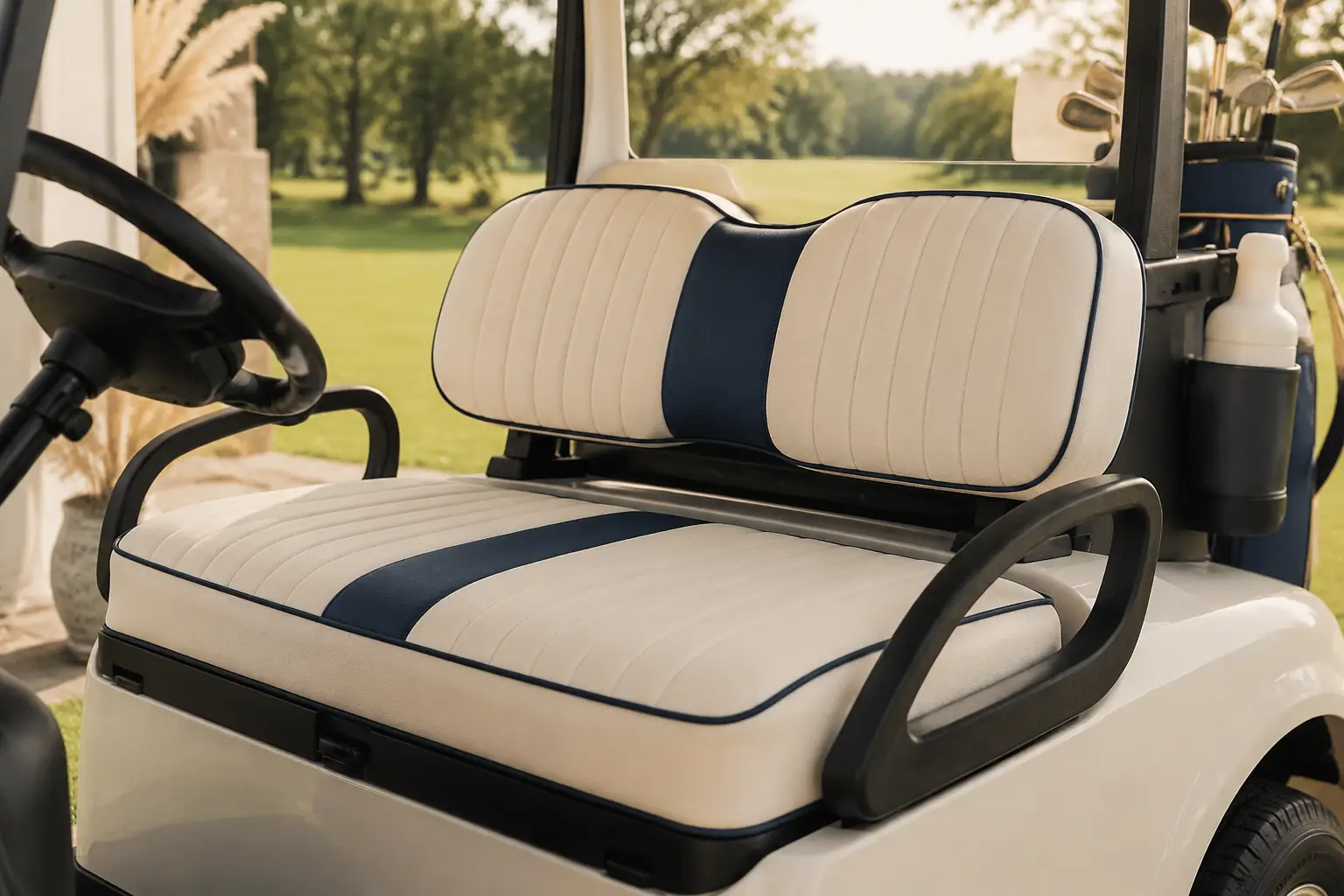
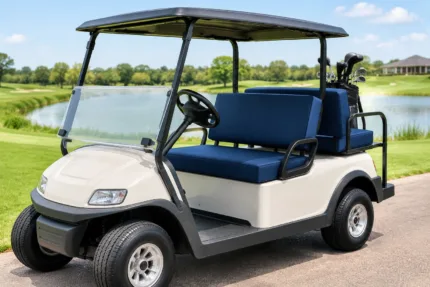
Custom Golf Cart Cushions
- Cut to your exact measurements — any cart, any seat kit.
- 119 performance fabrics at one price — full-sun and quick-dry outdoor lines included.
- One order, one dye lot — every piece in the run ships color-matched.
- Factory-direct from $166 — instant quote in the customizer below.
- ±½″ tolerance, re-checked before cutting — remade free if we cut it wrong.
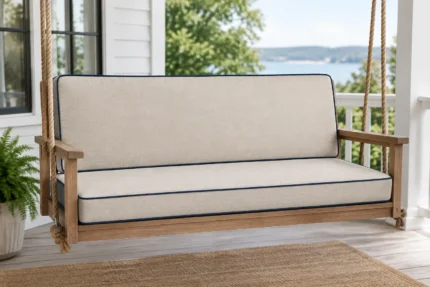
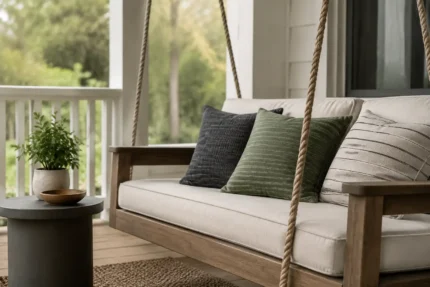
Custom Outdoor Swing Cushions
- Cut to your exact measurements — any swing, any frame, any fabric.
- 119 performance fabrics at one price — full-sun and quick-dry outdoor lines included.
- One order, one dye lot — every piece in the run ships color-matched.
- Factory-direct from $142 — instant quote in the customizer below.
- ±½″ tolerance, re-checked before cutting — remade free if we cut it wrong.
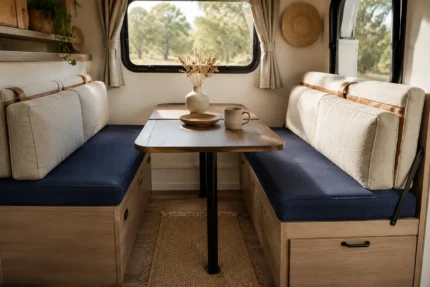
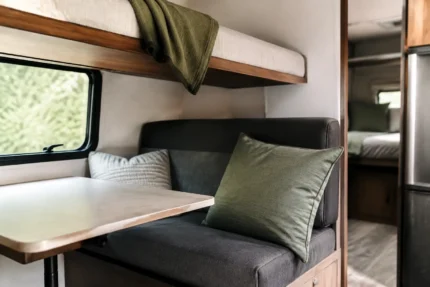
Custom RV Camper Cushions
- Cut to your exact measurements — dinettes, jackknife sofas, berths, any floorplan.
- 119 performance fabrics at one price — full-sun and quick-dry outdoor lines included.
- One order, one dye lot — every piece in the run ships color-matched.
- Factory-direct from $176 — instant quote in the customizer below.
- ±½″ tolerance, re-checked before cutting — remade free if we cut it wrong.
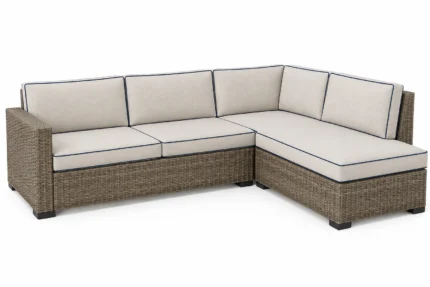

Custom Sectional Cushions
- Cut to your exact measurements — seats, corners, chaise ends, backs.
- 119 performance fabrics at one price — full-sun and quick-dry outdoor lines included.
- One order, one dye lot — every piece in the run ships color-matched.
- Factory-direct from $162 — instant quote in the customizer below.
- ±½″ tolerance, re-checked before cutting — remade free if we cut it wrong.