
Custom Chair Back Cushions, Made to Your Measurements
Factory-direct, cut to your measurements — dining chairs, rockers, high backs, any frame.
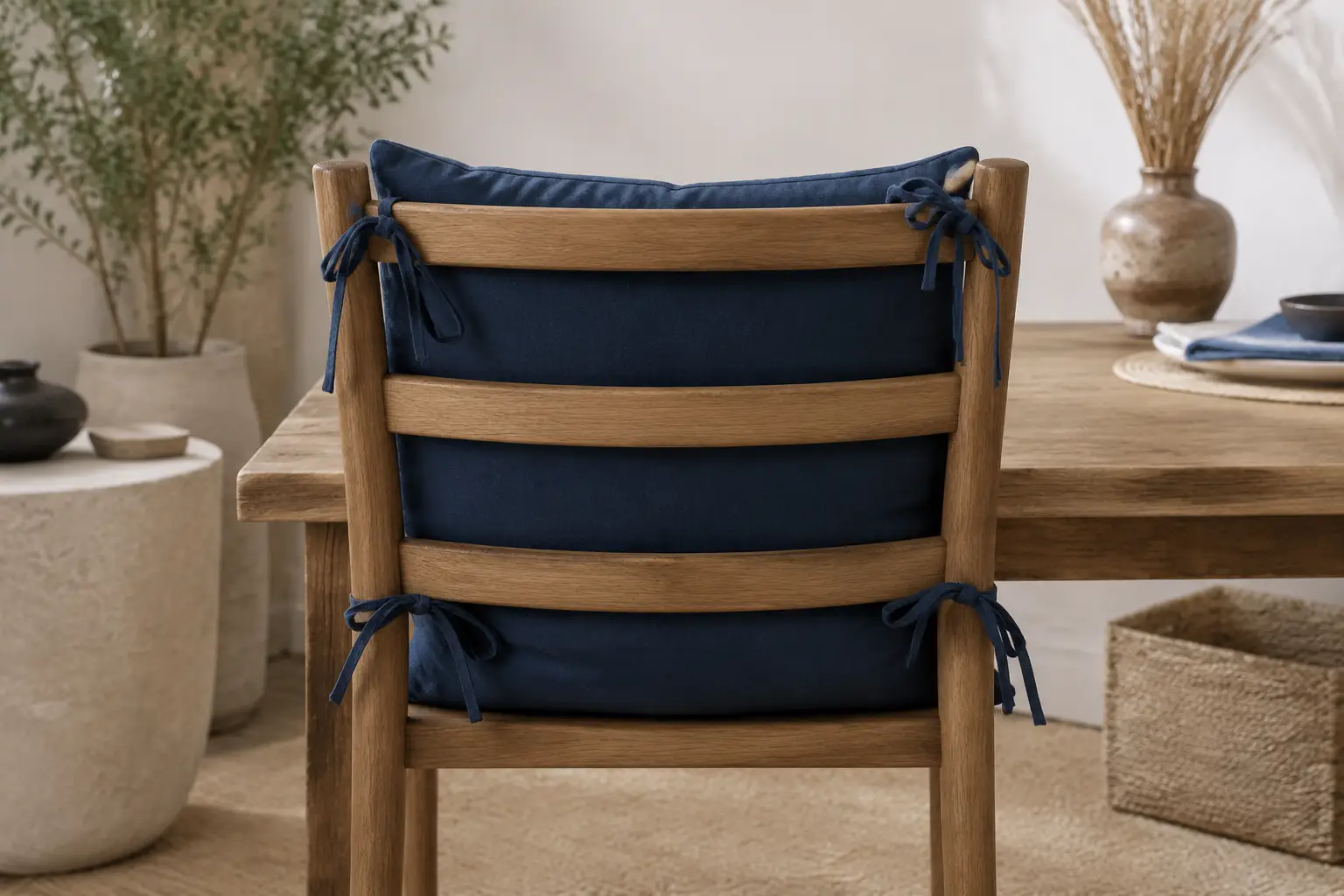
A chair back cushion is a small piece doing structural work: it has to fill the gap the frame leaves behind your lower back, fasten to slats or rails that were never designed with cushions in mind, and survive being leaned on from an angle seats never experience. That is why generic pads fail on chair backs faster than anywhere else — too short for the frame, too thin for the lumbar gap, ties that land on solid wood instead of in a gap.
We cut chair back cushions to your numbers — dining chairs and side chairs, rockers, high backs, wing backs, and the rounded backs that rectangle pads bunch on — with loft chosen for the lean and ties placed at your measured slat gaps. Order the back alone, or pair it with a seat pad in one run so the set matches in loft and dye lot.
Build Your Chair Back Cushion
Build your chair back cushion — start with the shape below.
Enter the back’s width, height, loft, and tie positions (slat gaps noted) — then pick your fabric tier and add the seat pad in the same run.
Need a different shape? Start from all 11 shapes →
Pricing — estimated starting at
| Fabric tier | Estimated price* |
|---|---|
| Cotton Linen | $77 |
| Tech Fabric | $80 |
| Premium Velvet | $83 |
*One chair back (18 × 20 × 3 in.): $39 make-base + 2.5 sq ft × rate ($15.32/$16.43/$17.56 per sq ft, 3" 50D foam + fabric). High backs and wing-back outline pieces price on their own area; seat-plus-back sets are the sum of their pieces.
For comparison: U.S. custom-configurator specialists’ 2026 listings sell chair backs only inside full quote-only sets — a lone back replacement rarely gets a published number. We publish the formula above so you can check the math before you order.
Popular Chair Back Sizes We Cut
Typical chair back sizes by chair type (typical, always measure):
| Piece | Typical size | Notes |
|---|---|---|
| Dining / side chair back | 16–20 W × 16–20 H, 2–3" | Ties at slat or rail gaps — pairs with a dining seat pad |
| High back chair | 18–24 W × 24–32 H, 3–5" | Head-support height; see our high-back chair guide below |
| Wing back | Outline piece with wings | Wings wrap the sides — sketch the outline with dimensions labeled |
| Rocker / glider back | 17–22 W × 16–25 H | Four reinforced ties; motion-duty — see rocking chair cushions |
| Rounded back | Radius top or fully rounded | A rectangle bunches — note the radius or send the outline |
| Outdoor chair back | 16–22 W × 18–26 H, 3–5" | Weatherproof build — start from outdoor cushions |
Yours differs? That’s the point — we cut to your numbers.
How to Measure a Chair Back Cushion
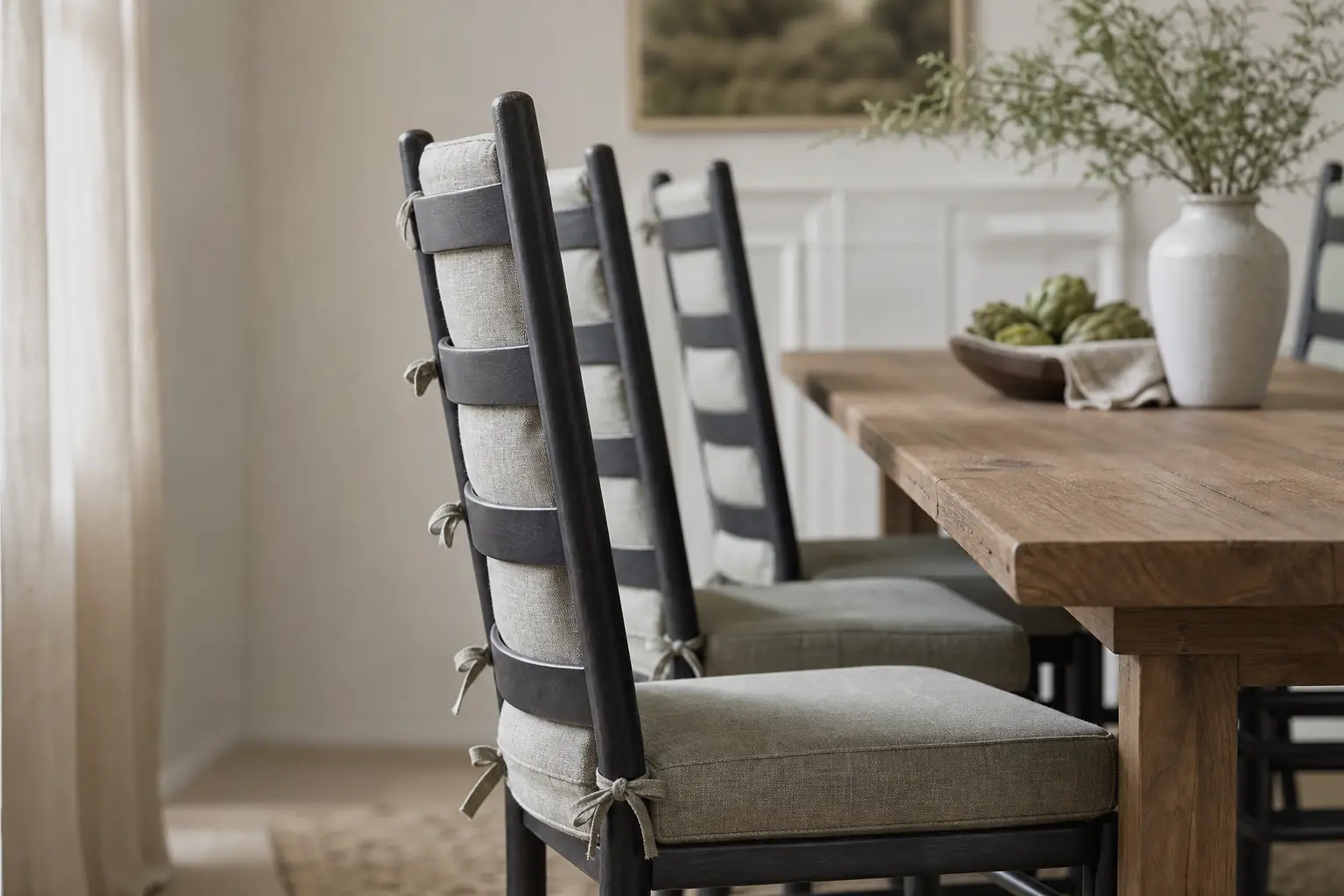
- Measure the frame, not the old pad: width between the posts or rails at the widest point, height from the seat deck to the top edge of the backrest area you want covered — to the nearest quarter inch.
- Loft by duty: 2–3 inches fills the lumbar gap on upright dining chairs; 3–5 inches for high backs and anything you lean into for hours. Match the original unless the original was the problem.
- Map the slat gaps or rail bars before ordering ties — a back cushion’s ties must land in gaps or around rails, and backs are the piece where generic tie placement misses most often.
- Rounded or winged backs: sketch the outline on paper with the radius labeled — numbers alone lose the curve, the same rule as radius corners.
Full walkthrough with photos: our measuring guide.
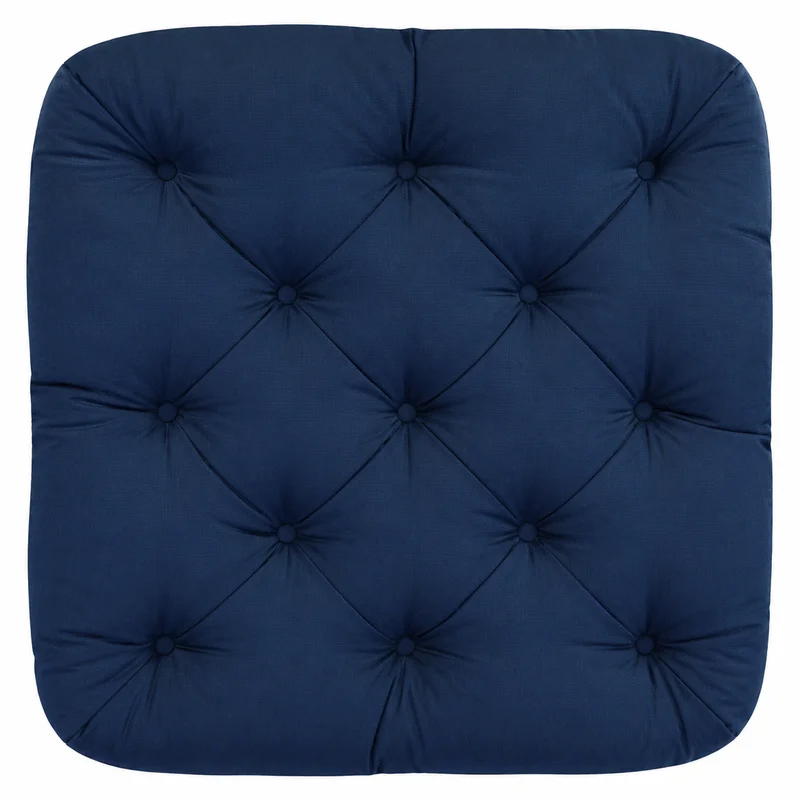
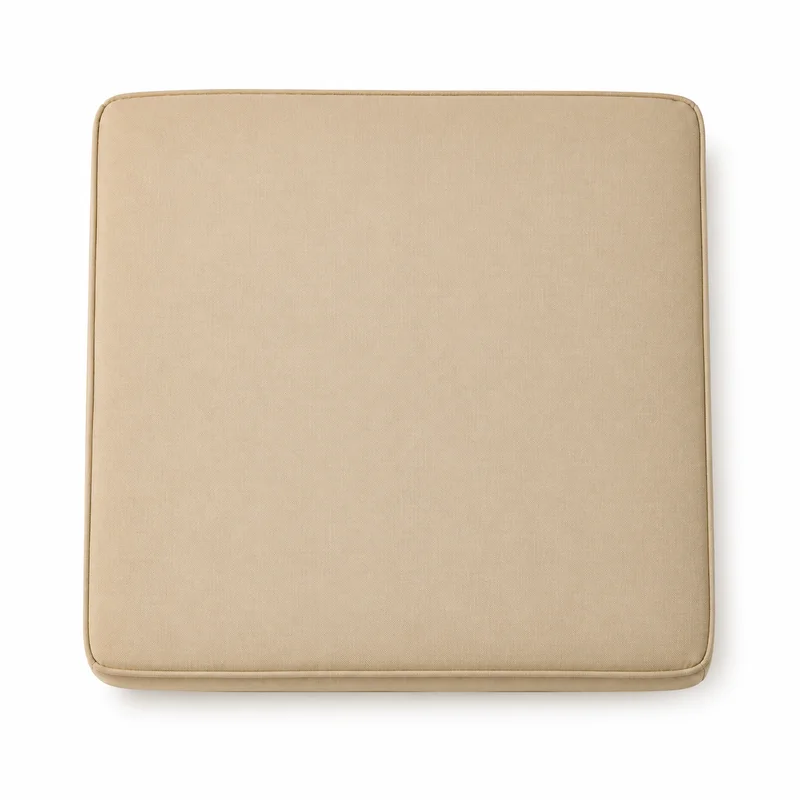
Build details — sewing style and fastening options confirmed with your dimensions before cutting.
Fabric for a Piece That Takes Angled Weight
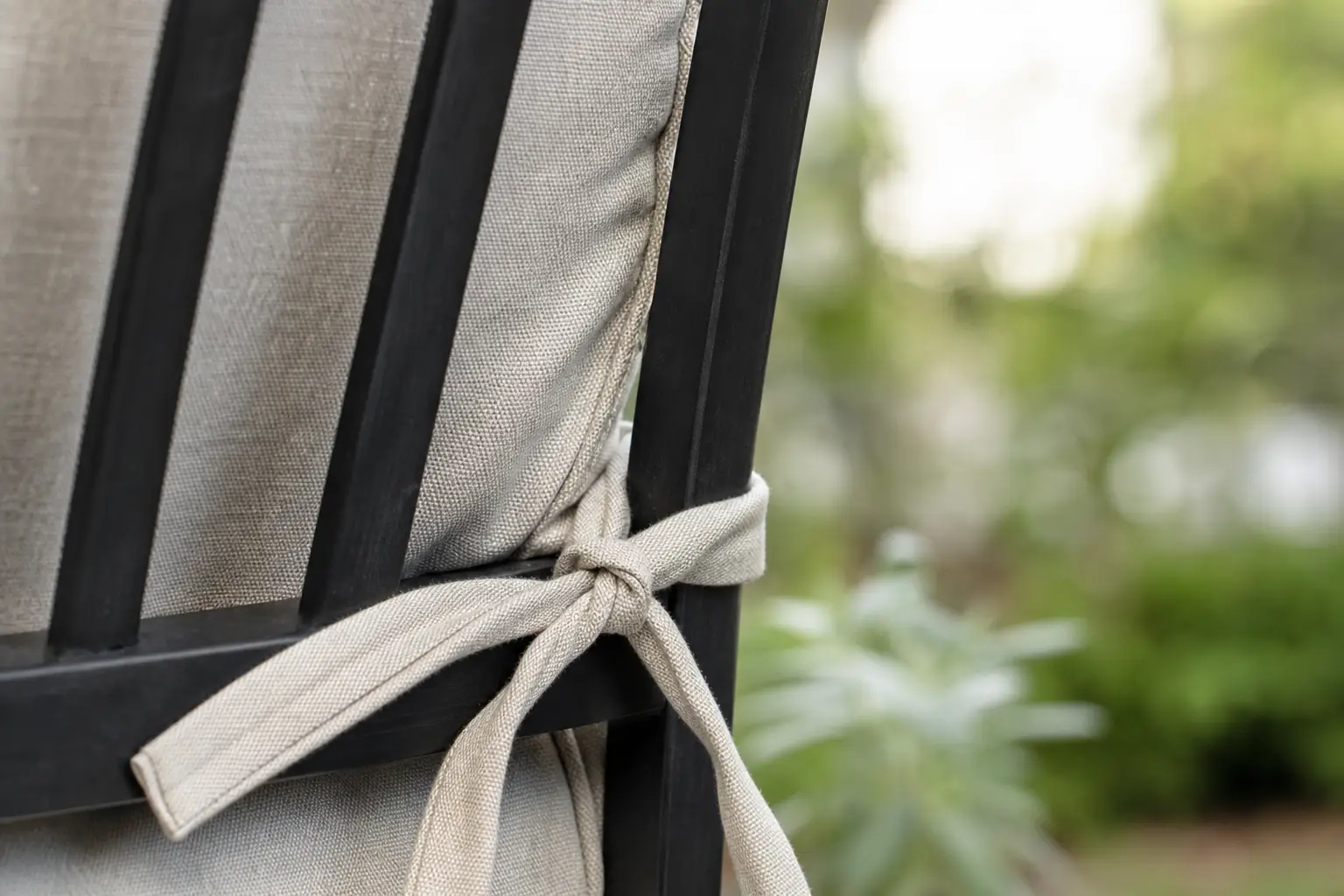
A chair back leans differently than a seat sits — angled, repeated, and always against the same spot — so the cover shows wear at the shoulder seams first. Cotton linen is the breathable natural weave for dining rooms; premium velvet takes formal chairs and holds up to claws; tech fabric wipes clean where the homework happens. On fill, 2–3 inches of foam core holds a lumbar shape that fiber-only backs lose in a season of leaning; the density logic is unpacked in our filling types guide.
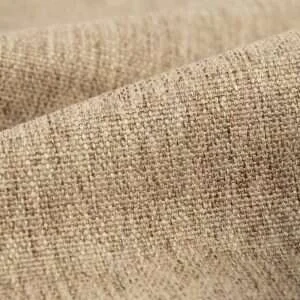
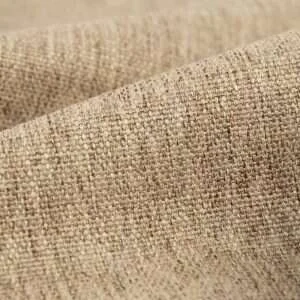
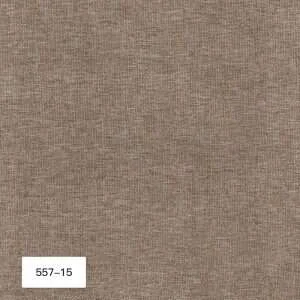
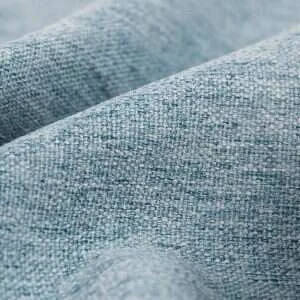
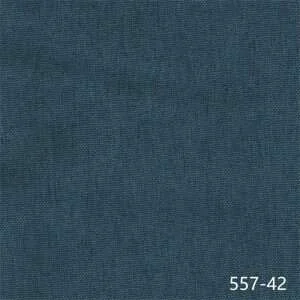
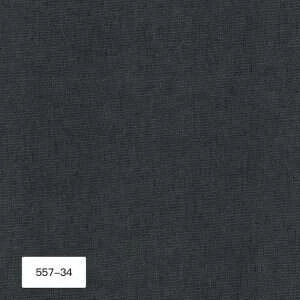

Seven of the 119 fabrics in the swatch library — free samples ship with every quote.
Frequently asked questions
Can I order standard chair back cushion sizes?
Standard sizes too — in 3 clicks: dining backs cluster at 16–20 inch widths and heights — type the standard numbers into the customizer for the same instant factory-direct quote. Made to order means never out of stock, and the slat gaps are still worth two minutes of measuring.
What size is a chair back cushion?
Dining and side chair backs run roughly 16–20 inches wide by 16–20 high at 2–3 inches of loft; high backs run 24–32 high. Frames vary more than the size words suggest — measure your own backrest area to the nearest quarter inch.
How do I keep a chair back cushion from sliding down?
Ties that land in actual gaps: thread them through slat gaps rather than around rails where possible, use four ties instead of two, and note that hook-and-loop strips tacked to a solid rail back hold better than ties on polished wood.
Can I get a back cushion for a high back or wing chair?
Yes — high backs run 24–32 inches tall at 3–5 of loft, and wing backs go in as outline pieces: sketch the back with the wings and label the dimensions, the same paper-template method used for curved and notched pieces.
Should I replace the seat and back together?
If more than one piece is worn, yes — one production run gives the set the same loft and the same dye lot, and a new back against an old seat shows at the seam line. The full reasoning is in our seat and back sets guide.
Made by the factory that ships them
- Outdoor cushion factory for 10+ years — we cut, fill, and sew every order ourselves.
- Every dimension you send is re-checked before a single yard of fabric is cut.
- Made-to-order means any fabric, any piece, no minimum.
- Cut to ± ½ inch of your confirmed dimensions, in writing — outside tolerance, remade free.
Related categories
- Back Cushions — the sofa, bench and outdoor back chart
- Dining Chair Cushions — the seat pads that pair with dining backs
- Rocking Chair Cushions — motion-duty backs with reinforced ties
Further reading from the blog
- Outdoor back cushions — loft, density and attachment — the lean-duty physics behind every back
- Sofa back cushion replacement — why backs go hollow first
- Seat and back cushion sets — why matched pieces order together
- High back chair cushions — head-support heights and fills
