
Outdoor Cushion Fabric Guide: Cotton Linen, Olefin, Performance & Sunbrella
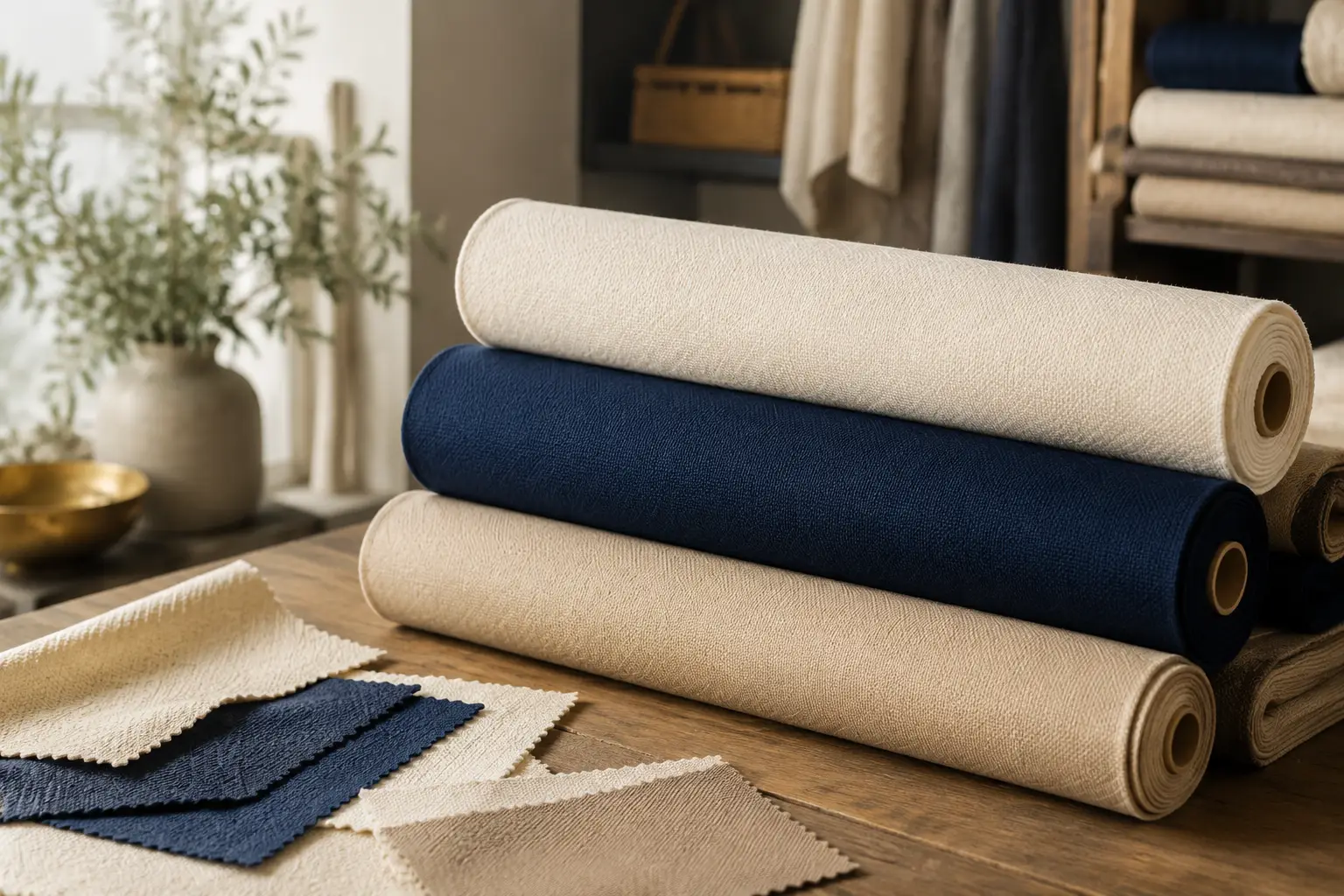
The four fabric families we actually cut with — compared on fade, water, mold, wear, and what each tier costs on a quote.
There is no single best outdoor fabric — there is a best fabric for your patio. A covered porch in Seattle and a full-sun deck in Phoenix punish fabric in completely different ways: moisture there, UV here. We cut and sew with all of these tiers every day, and this guide is written from the factory side — what we see come back after two seasons, and what we sew for customers who order twice.
On our quotes, fabric is one of three line items you control (shape area and foam density are the others). Every tier sews to the same measurements, on any of the 11 shapes we cut — so this decision changes the price, never the fit.
The Three Tiers on Our Quotes
| Tier | What it is | Strongest against | Typical use | Relative cost |
|---|---|---|---|---|
| Cotton Linen | Piece-dyed woven polyester | Budget, indoor and covered use | Covered patios, indoor benches, spare seats | base price |
| Tech Fabric | Solution-dyed olefin and blended weaves | Moisture, abrasion, daily traffic | Partial sun, mudrooms, dining benches, banquettes | +34% |
| Premium Velvet | Solution-dyed acrylic, 5-year fade warranty | UV fade, mold, bleach-cleanability | Full sun, poolside, south-facing windows | +79% |
Rates behind the tiers: $19.0 / $25.5 / $34.0 per sq ft of top surface + $39 make-base per piece. Example — a 48 × 16 window seat runs $140 / $175 / $220 across the tiers. Every quote itemizes these lines before you order.
What Actually Destroys Outdoor Fabric
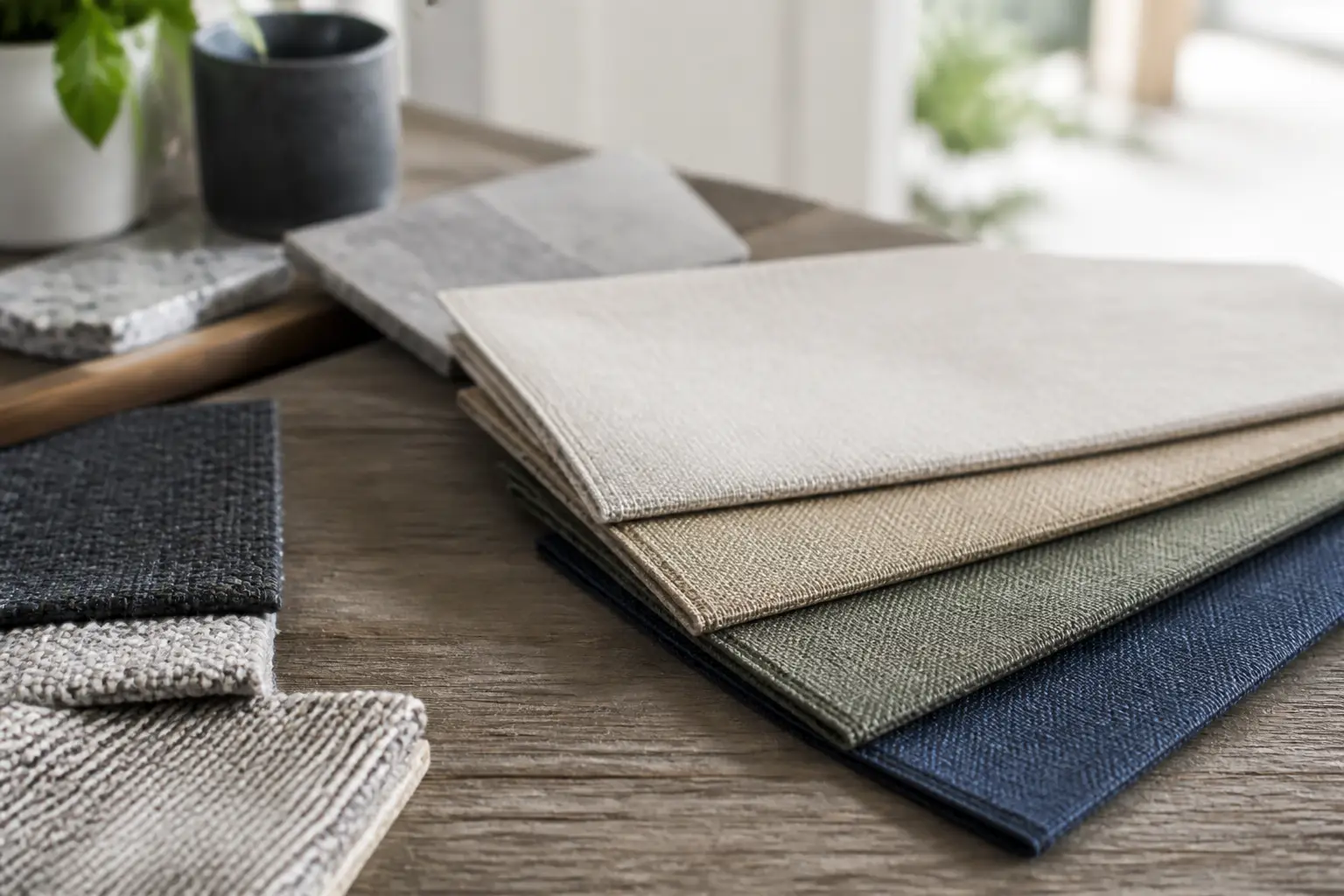
Before picking a tier, figure out which of these five is your furniture’s main killer:
- UV fade — the #1 killer in the Sun Belt and at altitude. Breaks down dye, then the fiber itself.
- Trapped moisture — the #1 killer in shade, humid climates, and under tree cover. Feeds mildew, rots thread.
- Abrasion and wear — friction on arms and seat edges, plus dirt grinding inside the weave.
- Stains — food, sunscreen, pollen, tannin. More texture and hydrophobic finish means more stain resistance.
- Mold food — not the fabric but the dirt film on it; whether you can bleach it determines recoverability.
Match the Tier to the Seat
| Your seat | Recommended tier | Why |
|---|---|---|
| Full-sun chaise or lounger | Sunbrella | Most UV hours on the patio; 5-year fade warranty |
| South- or west-facing window seat | Sunbrella (indoor line) | Glass magnifies sun; ordinary weaves bleach in a season |
| Mudroom or entryway bench | Tech Fabric | Abrasion plus cleanability for wet boots |
| Dining bench or banquette | Tech Fabric | Daily traffic and spills; wipe-clean surface instead of removable covers |
| Covered porch, spare seats | Cotton Linen | Roof removes the UV threat; base price wins |
| Bay window, any exposure | Per exposure, one dye lot | Three pieces must match — always order the set together |
The Three Fibers Behind the Tiers
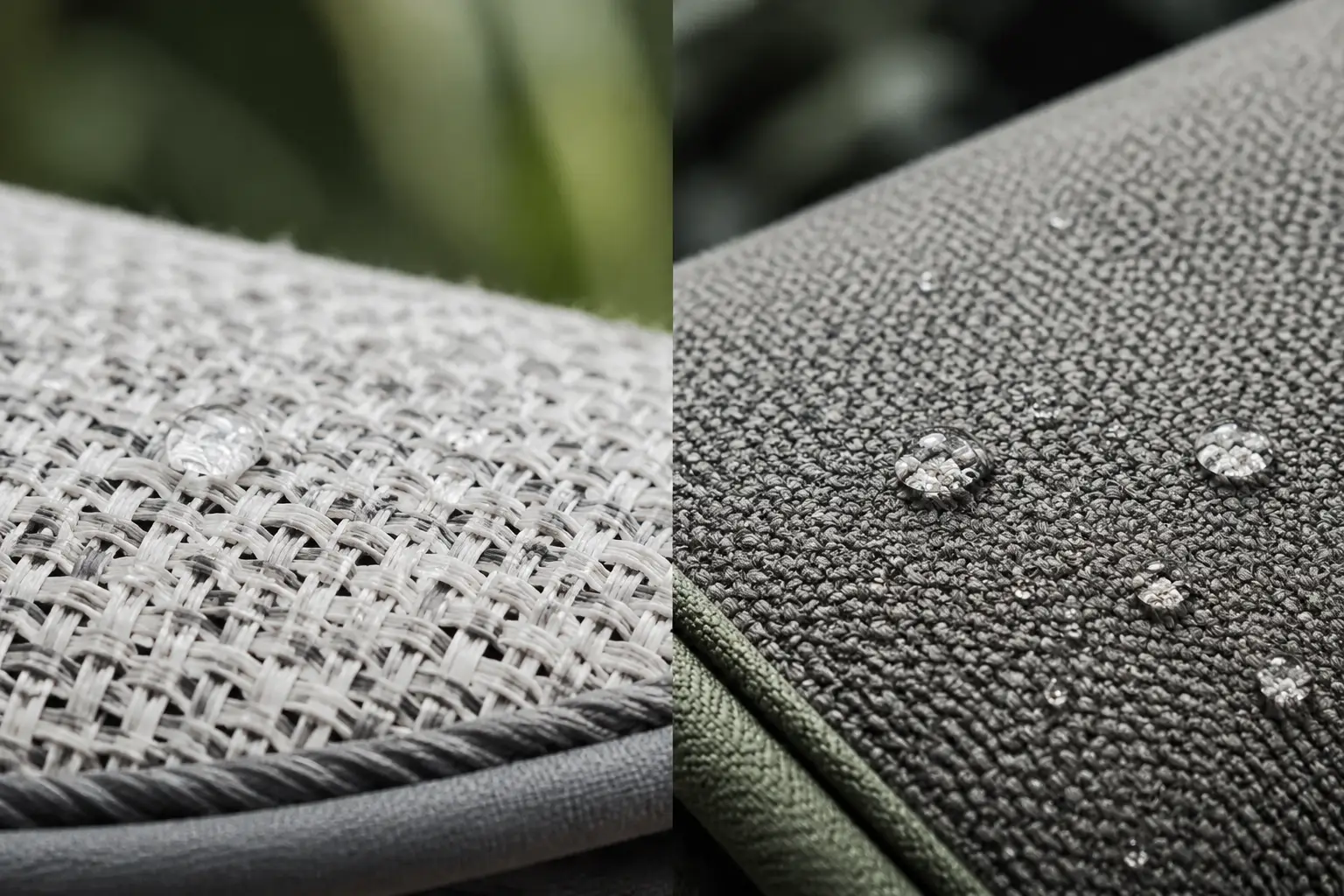
Strip the brand names off any outdoor cushion and the fabric is one of three fibers. Polyester (piece-dyed) is the budget standard: the yarn is woven first and colored after, so the dye sits on the surface where UV attacks it first — one to two seasons of direct sun is the honest fade life, which is why polyester belongs under cover. Olefin (solution-dyed polypropylene) extrudes the color into the fiber before weaving: better fade life, very low water absorption, and strong abrasion resistance — the working middle of the outdoor market and the backbone of our Tech Fabric tier. Solution-dyed acrylic is the premium fiber (Sunbrella is the household name): color-through fibers with multi-year fade warranties, bleach-cleanability, and the softest hand of the three. The fiber is the ceiling on performance; the weave and finish decide how close to that ceiling your cushion actually runs.
Thread, Seams and the Parts Nobody Advertises
Fabric gets the comparison tables, but a cushion fails at the sewing line more often than at the cloth. Outdoor thread must be UV-stabilized — generic polyester thread embrittles in a season of sun and the seams pop while the fabric still looks fine. Seams on horizontal cushions are water entry points: a sewn closure with sealed-edge construction sheds water where an open seam wicks it into the foam. Our covers close with sewn envelope closures (no zippers on our line), which keeps the weather out and the profile clean; cleaning is a wipe or a spot-clean rather than a cover-off wash. Ties and anti-slip undersides are sewn into the seams at your measured fastening points, not added afterward.
Care: The Two Habits That Double Cushion Life
The first habit is standing cushions on edge after a soaking — a cushion left flat traps water against the foam’s underside and the mildew starts there, inside, where you cannot see it. On edge, in shade or breeze, the core drains and dries in hours. The second is the pre-season deep clean: mild soap, cool water, a soft brush along (not against) the weave, then air dry — done once it removes the pollen-and-dirt film that mildew feeds on. Solution-dyed fibers take diluted bleach for stubborn stains without losing color; polyester does not, which is another honest reason the tiers price differently. Over winter, dry cushions stored flat in a breathable bag outlast cushions left on the frame under a tarp — a tarp traps the moisture it was meant to keep off.
Deep Dives
- Best outdoor cushion fabric — the full field, ranked by climate and exposure
- Sunbrella vs regular outdoor fabric — the head-to-head most buyers face first
- Is Sunbrella worth it? — the cost-per-year math
- Fabric color fastness for outdoor cushions — UV ratings explained
- Dog-friendly outdoor fabric — claw resistance without crayon texture
- Sunbrella replacement cushions — how to get fabric-right replacements
- Sunbrella cushions — the buying page, with tier pricing on real pieces
Premium Olefin · Beige
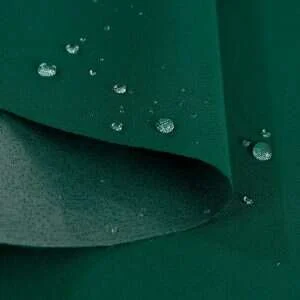
Premium Olefin · Deep green
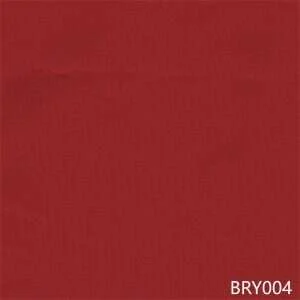
Premium Olefin · Red
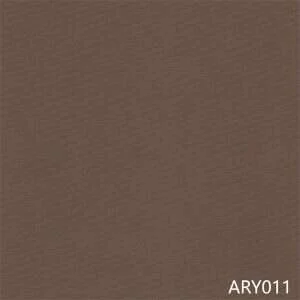
Premium Olefin · Brown
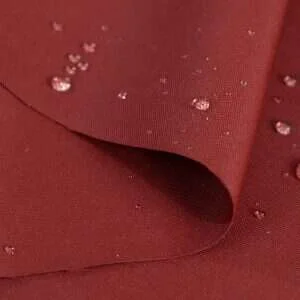
Premium Olefin · Claret
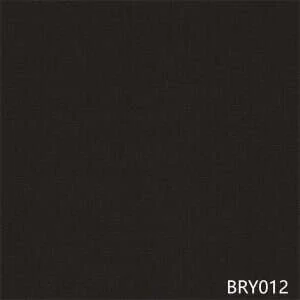
Premium Olefin · Deep brown
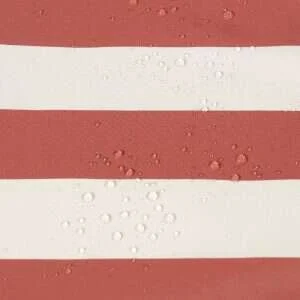
Cabana Stripe Canvas · Red
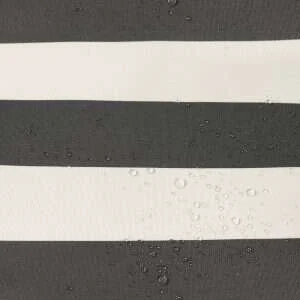
Cabana Stripe Canvas · Gray
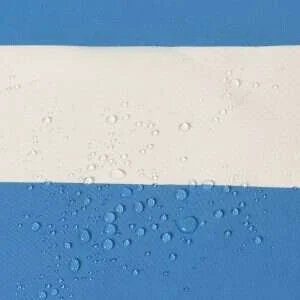
Cabana Stripe Canvas · Blue
Outdoor-pool swatches across the three tiers — cotton-blend, olefin canvas and premium performance weaves.
Frequently asked questions
What is the best fabric for outdoor cushions?
There is no single best — there is a best for your exposure. Full sun: solution-dyed acrylic (Sunbrella, Tempotest). Humid shade: olefin or acrylic, which hold little water and resist mildew. Covered porch or indoor nook: polyester grades deliver the job at the lowest cost.
Is Sunbrella really better than polyester?
On fade, yes, decisively: solution dyeing puts color through the fiber, so Sunbrella holds color for years where piece-dyed polyester bleaches in one to two seasons of direct sun. On price, polyester is roughly 45% less per cushion. The full head-to-head is in Sunbrella vs regular outdoor fabric.
What fabric should I choose for a covered porch?
Performance weave or polyester. A roof removes most of the UV threat, so what is left is moisture and wear — performance weaves cover both for a modest step up from base price. Save the Sunbrella upcharge for seats that actually see the sun.
Do cushion covers come off for machine washing?
Ours do not — covers close with a sewn envelope closure (no zippers on our line), so cleaning is a wipe with mild soap and water rather than a cover-off cycle. Sewn closures also keep weather out of the foam, which is half the reason the seams outlast the fabric.
How do I get mildew off outdoor cushions?
Mild soap, cool water and a soft brush first — the film mildew feeds on is usually dirt, not the fabric. On solution-dyed fibers (olefin, acrylic), diluted bleach removes the stain without taking the color; on piece-dyed polyester it can, so spot-test first. Then air dry with the cushion on edge so the core drains, not just the surface.
Why did my cushions fade in one summer when the label said UV-resistant?
“UV-resistant” describes a finish, not a fiber. Finishes wash out; solution dyeing is permanent because the color is the fiber. If the seat takes direct sun all season, the tier needs to be olefin or solution-dyed acrylic — anything finished rather than dyed-through is buying one season at a time.
Made by the factory that ships them
- Outdoor cushion factory for 10+ years — we cut, fill, and sew every order ourselves.
- Every dimension you send is re-checked before a single yard of fabric is cut.
- Made-to-order means any fabric, any piece, no minimum.
- Cut to ± ½ inch of your confirmed dimensions, in writing — outside tolerance, remade free.
Related pages
- Sunbrella cushions — the top tier, priced on real pieces
- Custom chaise lounge cushions — the most sun-exposed seat there is
- Start from all 11 shapes — the customizer with the fabric tiers
