
Custom Indoor Bench Cushions, Cut to Your Bench
Factory-direct, any length and depth — from a 24-inch hallway pad to a 96-inch end-of-bed runner.
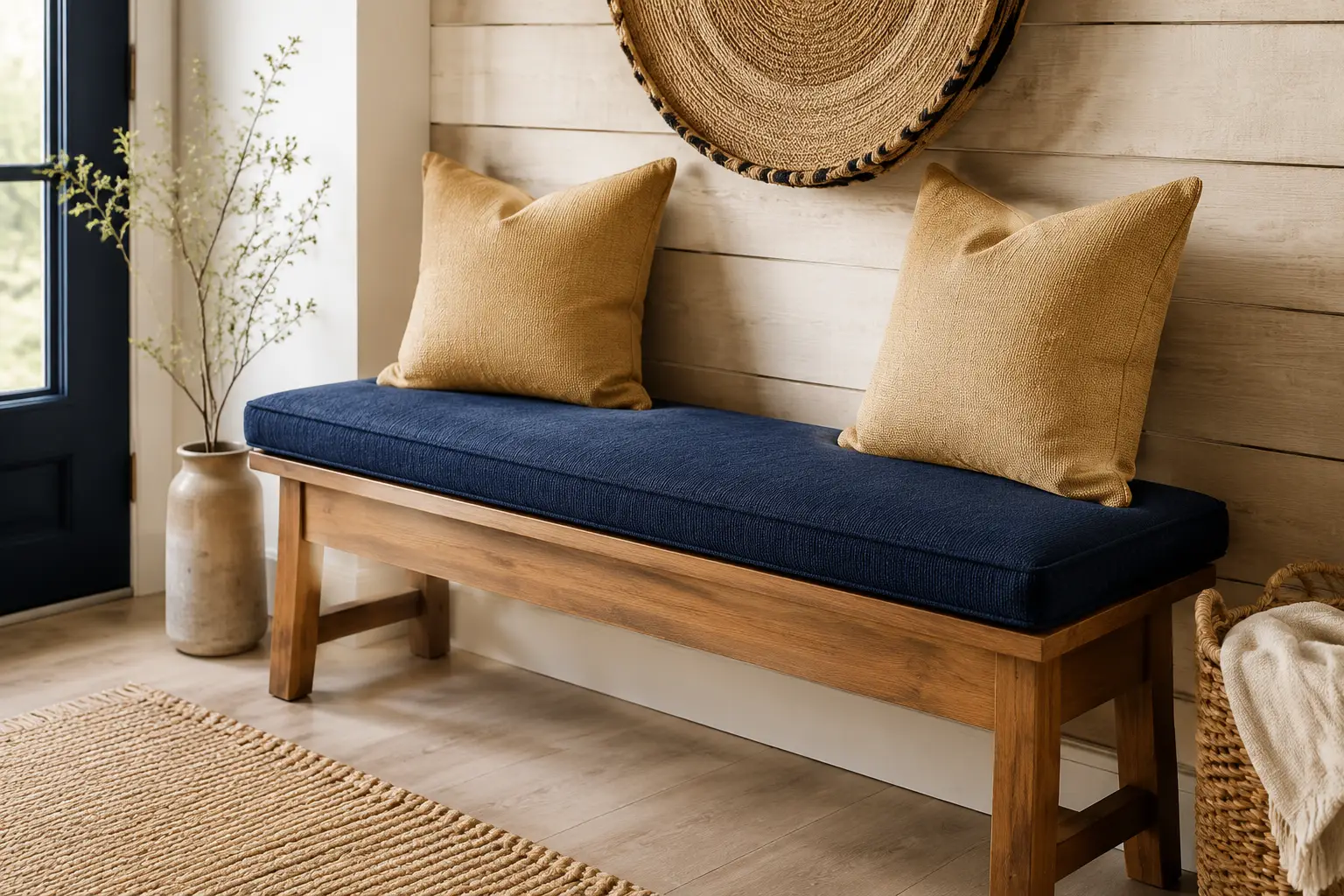
Entryway benches, dining benches, mudroom seats, end-of-bed benches — they all share one problem: nobody makes replacement cushions in their size. Yours is 55 inches. The store pad is 48. Or 72. And the one that’s close is thin as a pancake and slides every time someone sits down.
Send us the measurements and we’ll cut a bench cushion to the exact length and depth of your seat — from a slim 2-inch hall pad to a plush 5-inch dining bench you’ll linger on. Choose foam density for how you actually use it, add ties or an anti-slip underside, and pick from indoor fabrics that take daily traffic. One bench or a whole mudroom row: made to order by the factory, no minimums.
Build Your Bench Cushion
Enter your bench’s length, depth, and thickness — see it drawn to scale before you order.
Any length from 24 to 96 inches, rounded ends as a corner-radius option, sewn ties and an anti-slip underside at checkout.
Rounded ends or a notched corner? Start from all 11 shapes →
Pricing — estimated starting at
| Fabric tier | Estimated price* |
|---|---|
| Indoor / Outdoor Cotton Linen | $140 |
| Tech Fabric | $175 |
| Premium Velvet | $220 |
*One cushion at a typical entryway size (48 × 16 in., 5.3 sq ft): $39 make-base + 5.3 sq ft × fabric rate ($19.0/$25.5/$34.0 per sq ft). Small hall pads start at $83; a 72 × 18 dining bench runs $210/$268/$345. Every dimension is confirmed with you before we cut.
For comparison: U.S. custom-configurator specialists’ 2026 listings for made-to-order cushions in common sizes (16×16 through 24×24) run roughly $71–$119 before shipping — and most only reveal that price after a quote request. We publish the formula above so you can check the math before you order.
Common Bench Sizes
| Bench type | Typical W × D (in.) | Recommended thickness (in.) |
|---|---|---|
| Entryway / mudroom | 36–48 × 14–16 | 2–3 |
| Dining bench | 60–84 × 16–18 | 3–4 |
| End-of-bed | 72–96 × 18–24 | 3–4 |
| Hallway / foot-of-stairs | 24–36 × 12–14 | 2 |
| Glider bench (Hampton Bay Edington, measured) | 48 × 21.5 | 5 |
Yours differs? That’s the point — we cut to your numbers.
Own that glider? See Edington glider bench cushions for the exact-fit page. We are not affiliated with the brands listed — names are used for fit identification.
How to Measure a Bench Cushion
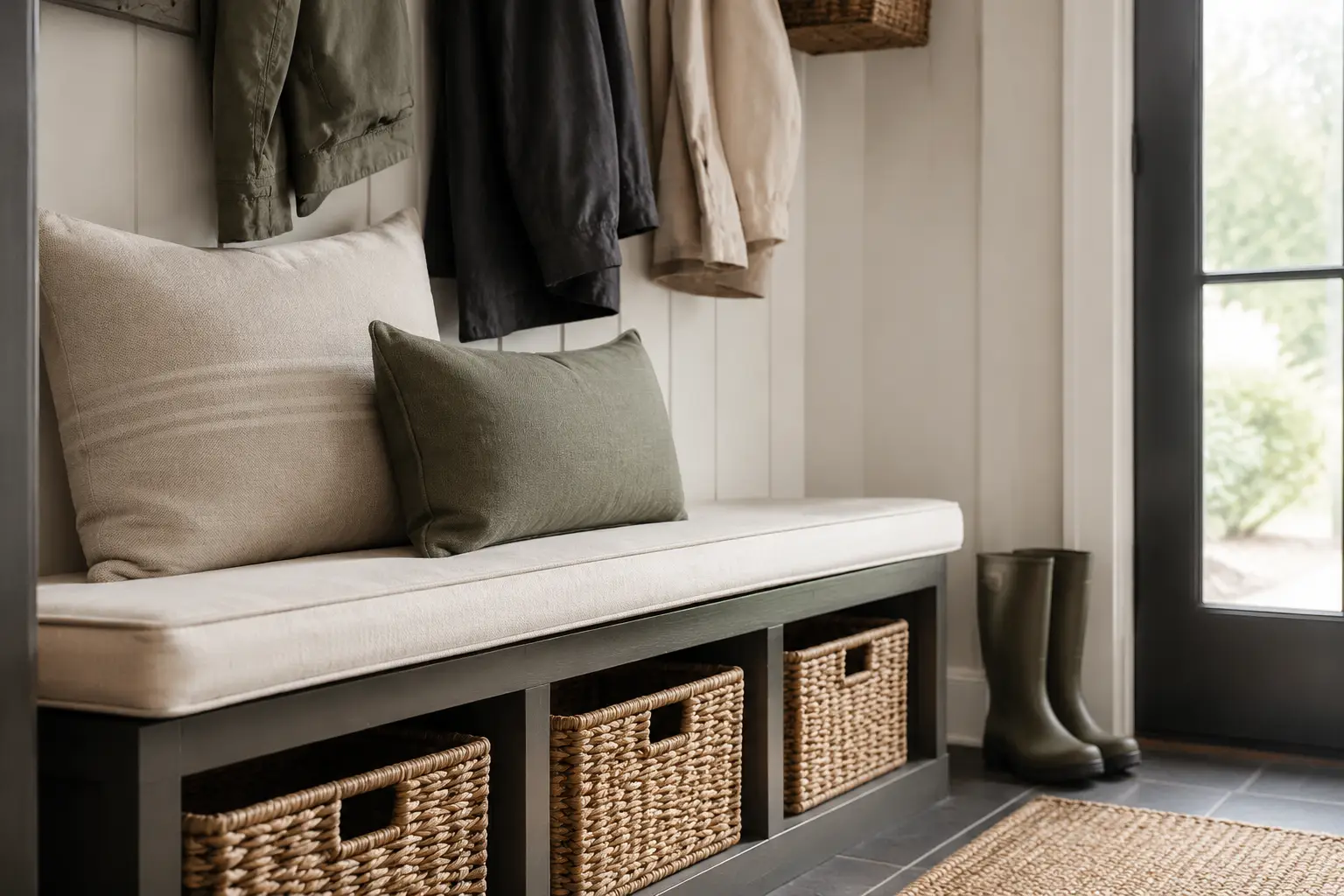
- Long runs (60″+) want high-density fill — standard foam dips at the midpoint within a season.
- Dining benches with backs: order seat and back as separate line items and measure each separately.
- Rounded bench ends? Add the corner radius in the customizer instead of guessing the pad narrower.
- Mudroom benches near the door: choose a cleanable performance fabric for wet boots and backpacks.
Full walkthrough: our measuring guide.
Fabric That Takes Daily Traffic
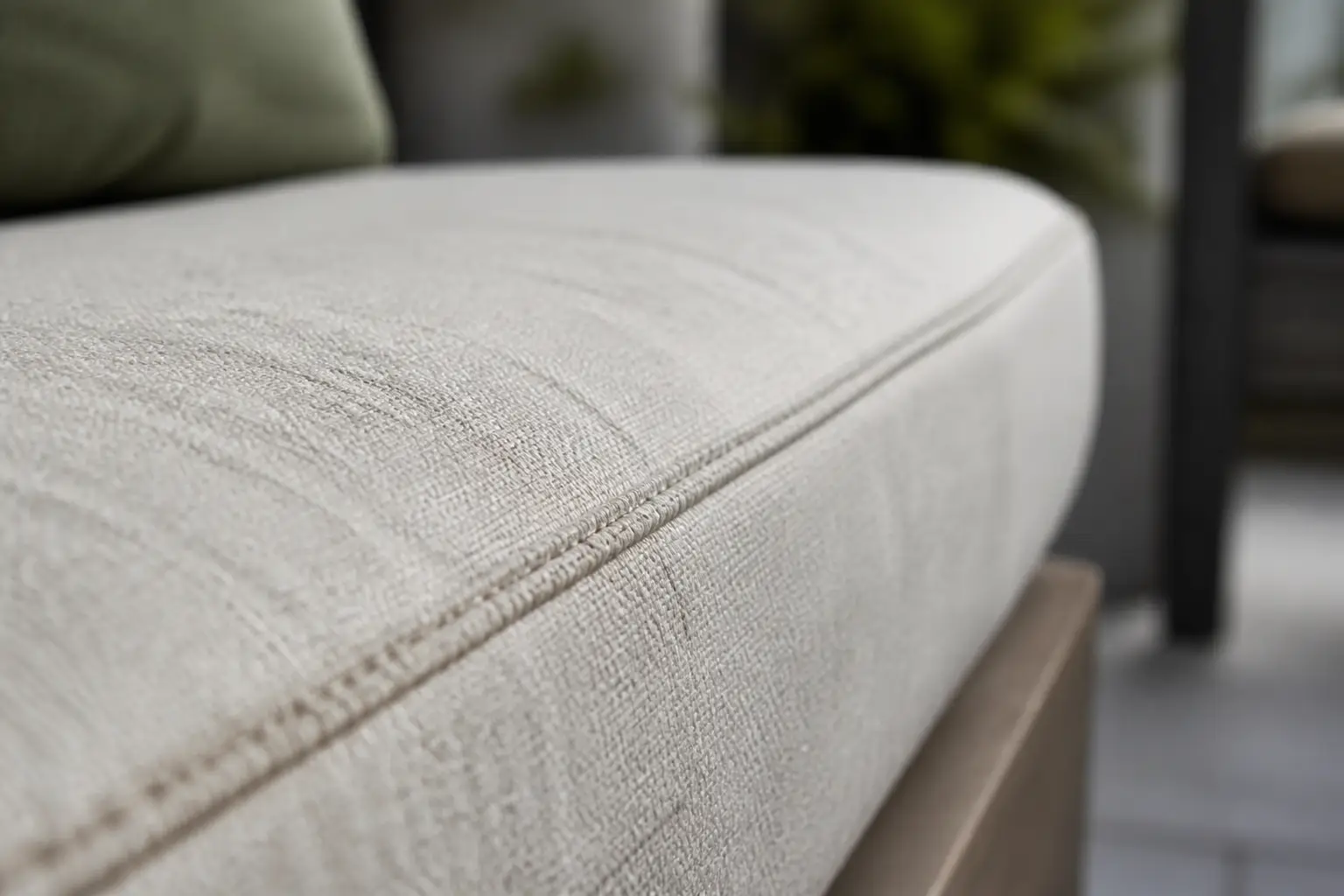
Bench cushions take more abuse per square inch than any other seat in the house. Performance weaves are the default recommendation — abrasion-rated for daily traffic, cleanable, and available in the textures that suit mudrooms and dining rooms alike. For protected spots and display benches, indoor-only polyester keeps the budget down. Both sew to the same exact dimensions. Sun-drenched spots can step up to Sunbrella acrylic; the full tier-by-tier comparison is in the fabric guide.
Where These Benches Live
- The entryway and mudroom bench is the workhorse case: wet boots, backpacks, the dog. Tech Fabric (waterproof, wipe-clean) is the honest spec here at 2–3 inches, with an anti-slip underside against the hard deck and ties if the bench travels. The pad is a consumable in this room — order it cut to last, not to impress.
- The dining bench — the bench replacing chairs at the table — runs 60–84 inches at 3–4 inches of foam and wants 50D for meals that linger. Families with bench-plus-chairs hybrids should measure both seat types in one order so the heights agree at the table.
- The end-of-bed runner is display duty with sit-down reality: 72–96 inches, 3–4 thick, and the fabric you actually chose the bedroom around — Premium Velvet reads dressmaker here, Cotton Linen reads calm. Long runs ship as two pieces past 72 inches; the seam hides at the bed side.
- The hallway and foot-of-stairs pad is the small one — 24–36 inches, 2 inches, tied down because hall benches get brushed past a hundred times a day. The budget stays modest because the area does.
- The storage bench — the hinged-lid seat hiding the off-season throws — is the measuring special case: a storage bench cushion sits inside the lip, so width and depth come from the opening’s inside walls, and thickness stops where the lid still latches, usually 2–3 inches. 50D for a lid that cycles daily; ties on the hinge side, anti-slip on the sitting side.
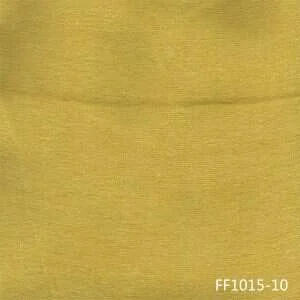
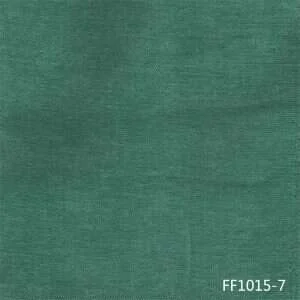
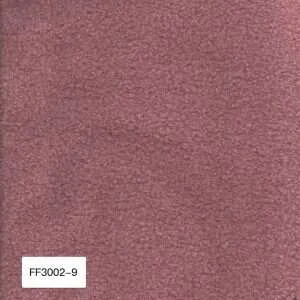
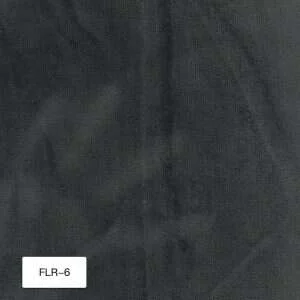
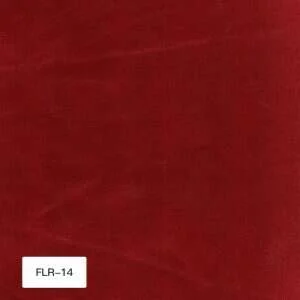
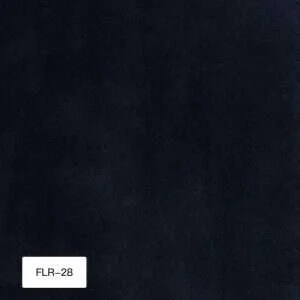
A draw from the 119-fabric swatch library — free samples ship with every quote.
Frequently asked questions
How thick should a bench cushion be?
2–3″ for a hallway or entryway bench you sit on briefly; 3–4″ for dining benches where comfort keeps people at the table. Above 5″, a single long cushion gets unwieldy — consider splitting it into two pieces.
My bench is 70 inches — one cushion or two?
We make either. One piece looks cleaner on a display bench; two pieces (each ~35″) are easier to flip, wash, and store, and stay flatter over years of use. For 72″+, most customers choose two.
How do I stop a bench cushion from sliding?
Sewn ties at the corners are the classic fix; a gripper underside works on wood; for mudroom benches, a sewn envelope closure keeps the silhouette clean — spot cleaning handles real-life spills.
Can I order a standard bench cushion size?
Standard sizes too — in 3 clicks. Stock-friendly runs are 36, 48, and 60 inches long by 16–18 deep at 2.5–3 thick; type the numbers into the customizer for the same instant factory-direct quote. Nothing is warehoused, so no size is ever out of stock — and odd lengths price on the same formula, not a premium.
What foam density does an indoor bench need?
50D for anything used daily — long runs dish at the midpoint first, and density is the spec that buys years there. 35D is honest for a hallway pad sat on in passing; the dining bench and end-of-bed runner want the daily grade.
Can a bench cushion have rounded ends?
Yes — rounded and radius ends are a corner-radius option in the customizer: measure the straight edges and the radius, and the pad is cut to follow the bench instead of squaring it off. Very rounded ends over an inch or two get sketched like an outline piece.
What size cushion fits a storage bench?
The one cut to the opening, not the lid: measure the inside walls — typically 30–48 by 14–18 inches — and cap thickness at 2–3 inches so the lid latches. A storage bench cushion cut to the lid’s full width jams the hinge side and gaps the other; the lid, not comfort, sets the thickness budget.
Made by the factory that ships them
- Outdoor cushion factory for 10+ years — we cut, fill, and sew every order ourselves.
- Every dimension you send is re-checked before a single yard of fabric is cut.
- Made-to-order means any fabric, any piece, no minimum.
- Cut to ± ½ inch of your confirmed dimensions, in writing — outside tolerance, remade free.
Related pages
- Outdoor bench cushions — same long-deck builds with weatherproof fabric and foam
- Window seat cushions for built-ins — wall-to-wall runs, nooks, notched corners
- Edington glider bench cushions — the 48″ bench, factory-measured
- Bay window cushions — front pads and corner wedges
- Start from all 11 shapes — rounded, notched, L-shape and more
Further reading from the blog
- How to measure an L-shaped bench cushion — corner benches and wrap-around runs
- Bench cushion measurements — sizes, thickness and fit for any bench
